Wednesday, May 15, 2013

SOUTHLAND TALES (2007)

As a long-time fan of “quirky” movies, I was predestined to enjoy Richard Kelly’s debut feature film, the quirk-filled Donnie Darko. Taken as I was with the theatrical release, I was very excited about the upcoming “Director’s Cut” and to prep for it, I listened to the director’s commentary on the original DVD. About ten minutes into it, director Kelly said something that threw me off completely:

“And from this point on we’re in the alternate universe…”
“What?” I said. I literally said this to the television and demanded Kelly to repeat what he said. I’d watched Donnie Darko a couple of times prior to the commentary and his pronouncement caught me completely off-guard, making me question not only my understanding of his movie, but his understanding of his movie. Like most viewers, I considered the titular Donnie’s journey throughout the film to be a Lynchian dreamscape while his awake body quivered with fear over nuclear destruction, just as we all did in the ‘80s. When I viewed the “Director’s Cut”, I saw where Kelly labored to leave additional clues to time travel and alternate time lines, but I still felt, in the end, that I never would have come to those conclusions without him telling me. His commentary definitely changed my view of the film. Where before I thought it was enjoyable, trippy and intelligent, I was now thinking of it as a muddled, metaphysical mess.
So it came as no surprise to me when  his sophomore film, the $17 million dollar-plus Southland Tales, with its stunt cast and visual tics, I viewed it as a plainly, laid-right-out-there-in-front-of-god-and-everybody, muddled, semi-metaphysical mess, albeit with some ham-handed satire. I enjoyed it, in much the same way I love fever dreams like Forbidden Zone and Dr. Caligari, but my final thought was that every scene was terrific, but none of them were actually in the same movie.
The film’s sprawling narrative takes us from a nuclear blast in Abilene, Texas, in 2005, to the “present” of 2008, where America is in the middle of a tight electorial race (the shudder-inducing Clinton/Lieberman vs. Eliot/Frost), is under the constant watch of Orwelian surveillance via the company USIDent (overseen by Bobby Frost’s wife, Nana Mae Frost (Miranda Richardson), is on the threshold of a new Tesla-esque machine that will turn the ocean into a perpetual motion machine of renewable energy, and an extreme Democratic Left-turned-terrorists, weilding guns and poetry and going under the umbrella of “Neo-Marxists”.
But that’s all background. The meat of the story involves an action movie star named Boxer Santaros (Dwayne Johnson) (married to Madeline Frost, daughter of Republican VP nominate Sen. Bobby Frost), who has been missing but was found with amnesia by porn-star-turned-talk-show-host Krysta Now (Sarah Michelle Gellar, who’s line about “I like to get fucked and I like to get fucked hard. But violence has no place in porn. That’s why I don’t do anal.” Surely caused some fanboy heads to explode.) The two of them wrote a screenplay called The Power, in which both will star, that tells about the last three days of the world, as prophesized by a newborn baby that has not produced a bowel movement in almost a week. To research his part, Krysta arranges for Boxer to ride-along with Officer Roland Taverner (an appropriately bewildered Seann William Scott).
Parallel to this, a Neo-Marxist group run by Cindy Pinziki (Nora Dunn) and Zora Carmichaels (Cheri Oteri) have hatched a plot to rig the election using “donated” severed thumbs, whose prints can be reused in multiple districts. Cindy (as “Deep Throat 2”) is also in possession of an incriminating sex tape starring Boxer and Krysta that could only spell scandall to the Frost campaign if released. In exchange for this tape she demands one million dollars and a vote of “Yes” on “Prop 69”, which will limit the powers of USIDent.
The third part of their plot seems to have been Zora’s brainchild. She forces the amnesiac Ronald Taverner to kidnap his twin policeman brother to pose as him and manipulate Boxer’s ride-along. The plan is to catch “Roland”, a “racist cop”, gunning down activist performance artists Dion Element and Dream (Amy Poehler), using blanks and squibs, of course. Once Boxer catches this assassination on tape, it can be used as further leverage against the campaign and Frost advisor Vaughn Smallhouse (John Laroquette).
Thirdly, there is Baron von Westphalen (Wallace Shawn), grandson of Karl Marx’s wife Jenny Von Westphalen, who is the genius behind “Fluid Karma”, the gigantic machine that harnesses the oceans waves to produce a continent-wide energy field to reduce America’s dependence on foreign oil—from which we’ve been embargoed anyway due to four Middle East Wars (Iraq, Iran, Syria and Afghanistan). But the Baron, far from a philanthropist, wants to use Fluid Karma for world domination.
Finally there’s the narrator, Pilot Abilene (Justin Timberlake), a disfigured war vet, omnicient from his perch in an anti-aircraft turret, who has ties to the major players, deals a drug version of “Fluid Karma” from his arcade on the Santa Monica pier, and warns us from the beginning, “This is the way the world ends: not with a whimper, but a bang.”
This reworking of the T.S. Eliot poem, “The Hollow Men”, is reiterated several times throughout the film. As are lyrics from Jane’s Addiction’s “Three Days”, The Killer’s “All the Things I’ve Done” (which is used as an extended music video-dream sequence starring Pilot Abilene and a group of nurses who are meant to look like Marilyn Monroe, but bear the platinum locks of Jean Harlow). The question is, are these lines meant to represent the weight of the narrative, or are they misdirects, giving over the propecy to dialogue like, “I am a pimp, and pimps don’t commit suicide.”?
I’m going to make a grand, sweeping statement that anyone will find Southland Tales impenetrable on first viewing, and may very well conclude at the nebulous anti-climax that it isn’t worth a second. That was certainly my attitude as the credits rolled. But something nagged at me. And continued to nag at me for a couple of years. Was there more to this pseudo-satirical jab at celebrity worship, government over-reach, fascism, Marxism, action film parody and theoretical physics than just all of the ingredients fed into a salad shooter and sprayed all over the viewer? Or is this another Donnie Darko, that will only make complete sense to its creator?
As I’ve found, on subsequent viewings, that the answer is probably a combination of the two.
When Kelly debuted a rough near-3 hour cut of Southland Tales at the 2006 Cannes Film Festival, it was met with jeers, boos and walk-outs. Notoriously, Roger Ebert wrote that it was as big a disaster as his most-hated The Brown Bunny. But Sony found promise in it and agreed to bankroll $1M worth of visual effects for completion if Kelly agreed to lose at least 20 minutes of running time. 

“Part of me feels like I got away with murder,” Mr. Kelly, 32, said in a recent interview in Manhattan. “It’s a film some people might consider an inaccessible B movie, and it’s been slaughtered at the biggest film festival in the world. They could have been like, ‘You want more money now?’” (NY Times, by Dennis Lim, 10/28/2007
Returning to the editing room, Kelly removed the requested twenty minutes, excising an entire subplot involving Jeaneane Garafalo as a military general working in collusion with Simon Theory (the gratefully-underused Kevin Smith), the only two upper brass who know the identity of the charred corpse found in Boxer’s SUV following his disappearance. Also reworked was the structure, moving a gruesomely funny scene involving the Baron and a Japanese business rival and the terms of a contract for Fluid Karma, from the first act to the second. Placing this scene later in the film manages to keep the Baron out of the “villain” role until much later. In the theatrical version, Wallace Shawn is simply a creepier version of The Princess Bride’s Vizini up until the “contract negotiation”. Further overtly villainous lines are also removed, but this also vagues up his connection to the Neo-Marxists, the identity of the burned corpse, and what role he expected Boxer to play in his scheme. While the Garafalo/Smith interactions didn’t add much to the plot (and only one scene with Smith had to be reworked to make it appear that he’s instead working under Nana Mae), but its removal makes a quick shot of Garafalo during the end celebrations a head-scratcher, but by this point, you should be through scalp and down to skull.
The real irony of the reworking is that the Cannes Cut is actually much more straight-forward of a narrative, inasmuch as Southland Tales can be considered straightforward. One thing that’s much more clear is how often Boxer slips into his character of Jericho Cane (an explicit dig/homage to Arnold Schwarzenegger’s character in End of Days) and the world of his screenplay when his psyche can’t handle the reality around him. Dwayne Johnson’s performance as Boxer among the highlights of the movie—when he’s stressed, he tents his fingers and twiddles them together, and to combat that he will “take a moment” and slip into the macho Jericho and, fortunately or not, the world of The Power. In the theatrical cut, this isn’t immediately clear and only alienates the viewer from the ostensible hero.
Kelly seems to have directed all of the actors to deliver lines as either stilted or overly-sinister. Then again, with so many hidden agendas, maybe it’s possible that every character suffers from some sort of identity crisis, even if they haven’t traveled back in time 69 minutes to meet their future selves.
The film’s primary problem lies in the fact that it does not stand alone as a film in its current state. It requires patience and multiple viewings, but, as I stated above, if one is feels completely disconnected from the characters by quirk and misdirected satire, those multiple viewings will not occur.
Then there’s the argument that Southland Tales was never meant to stand alone. Prio to the film’s release, Kelly wrote three prequel graphic novels which apparently give further clues to the story’s intricate mysteries: Abilene and “his best friend” (as he says in the last line of the movie) Roland Taverner were subjected to experiments in Iraq that resulted in a panicked Roland lobbing a grenade in Abilene’s direction, causing his disfigurement and PTSD. It’s also implied that Abilene and Taverner—and anyone who takes Fluid Karma injections—become telepathic. The comics also explain Boxer’s numerous tattoos and how he received them under Krysta Now’s guidance (including the portrait of Christ on his back that bleeds through his shirt during a critical point in the climax), and even why that dumb Killer’s song is relevant.
I came upon all of this knowledge after the fact, and in point of argument, rather resented it. I am aware, now, of the “immersive” marketing studios do now, leading fans to hidden videos and website scavenger hunts, but that still feels a bit like a cheat to me, especially if critical information is being withheld by this strategy. If the movie can’t stand as its own entity, then it isn’t really a movie, it’s something else. In this case, Southland Tales is a story told in six chapters, broken across three graphic novels and the three “chapters” presented in the film.
To call Kelly’s vision for the movie “ambitious” is akin to referring to the ocean as “damp”. Inspired by the events of 9/11, Kelly had a lot on his mind and did his damnedest to cram it all in: political culture, instant celebrity culture, the evils of the Patriot Act, the idea of perpetual war, PTSD, conspiracy and the near-magical realm of quantum mechanical coincidence.
It’s no wonder that any first viewing feels like a high-pressure mental delousing. As Kelly said in an interview for About.com: “You know, there’s always that risk [that the audience won’t get it]. But I think we’ve made it as accessible overload. It’s going to be overload. It’s one of those movies that’s going to melt your brain. It’s definitely going to melt your brain when you watch it, but I think it’s now going to melt your brain in a way where you’re understanding it just enough to keep going with it. And the important thing also is you’re laughing.” (Exclusive Interview with Southland Tales Writer/Director Richard Kelly By Rebecca Murray, About.com Guide)
When Southland Tales was finally released, it was met with largely negative reviews. Because, no surprise, nobody knew what the hell to make of it. Over the years, it’s started to garner a cult following and has shown up on at least one “Most Under-rated Movie” list that I’m aware of. And that’s because the film, for all of its goofy obtusity, is worth multiple viewings. Like a character in a Dan Brown novel, on the second or third time through you start to see the connections, albeit slowly. You begin to see how pieces fit together—particularly if you pay close attention to the multiple computer-voice readouts of news reports that are ubiquitous in the soundtrack background. And if you don’t mind pausing every few seconds to read the scrolling info on Abilene’s laptop screen, other clues can be found and other connections can be inferred.
Between the Cannes cut and the theatrical, I found a very rich, dense and thought-provoking satire. Had I not heard of the Cannes cut and managed to run it down, to be honest I might never have revisited the film. But at least as far as Southland Tales goes, it’s not the “makes sense in my head” movie that Kelly thinks he made. Rather it’s a mystery puzzle box with clues scattered throughout the frames and running time. If you want to make sense of it, the movie demands your participation. Otherwise, you’re just stuck in a room with a bunch of folks with violent tourettes trying to explain the Book of Revelations.

[This article barely scratches the surface. Until I can further analyze this movie under controlled conditions, please check out this piece from Salon.com)


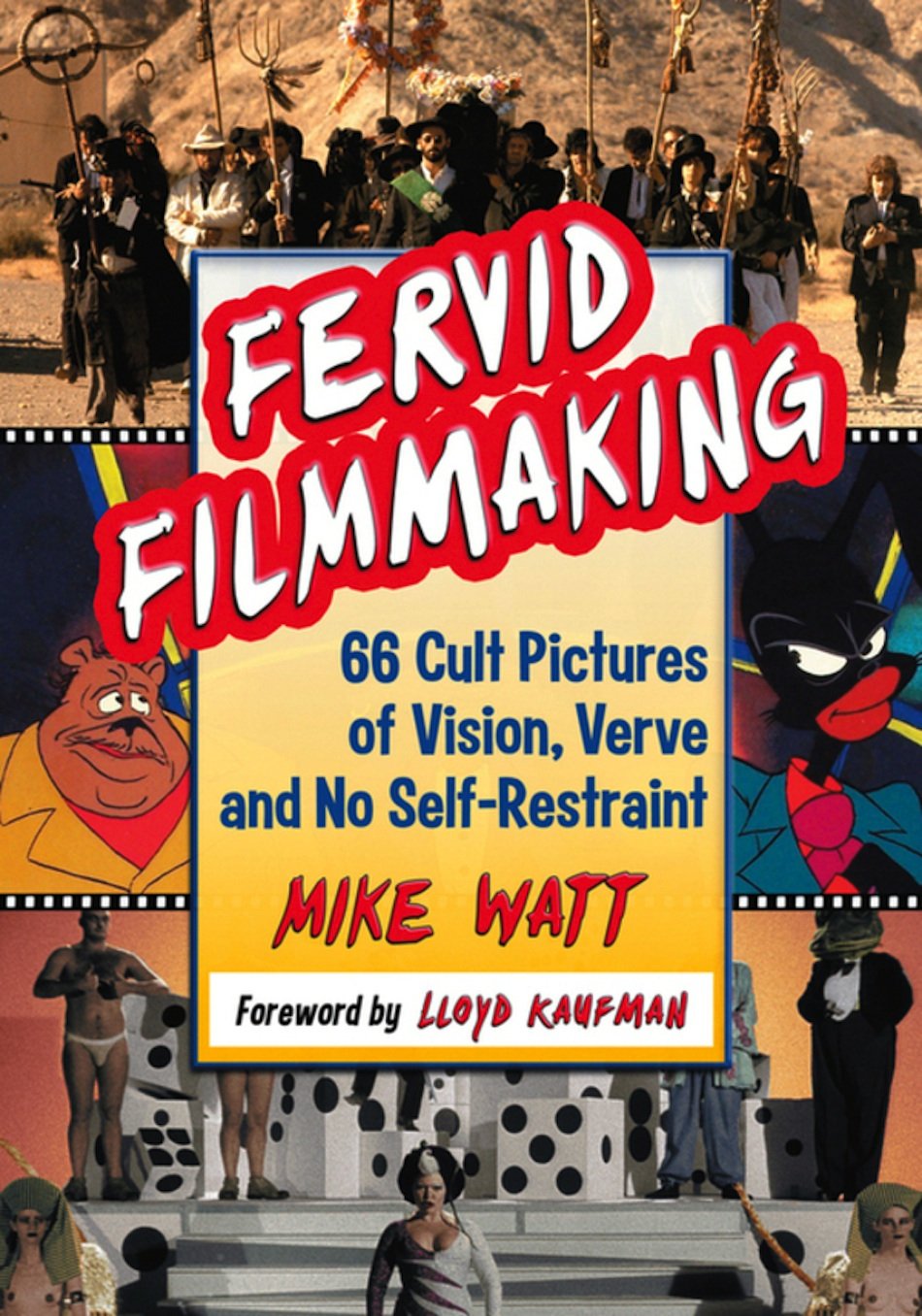
 And don't forget to pick up your copy of 

Fervid Filmmaking: 66 Cult Pictures of Vision, Verve and No Self-Restraint 

Now Available through McFarland Press


Friday, May 3, 2013

HAMMETT (1982)


[Image stolen from Wider Screenings]

As the picture fades up on the smoky visage of late ‘20s San Francisco, the following preface appears: “This is an entirely imaginary story about the writer Samuel Dashiell Hammett, who…in the words of one of his most gifted contemporaries…helped get murder out of the Vicar’s rose garden and back to the people who are really good at it.
“The detective story has not been the same since.”

Hammett, of course, is the author of The Maltese Falcon, a book and film that laid the floorplan for the modern day American detective story. A private eye is hired to find a mysterious object but after his partner is murdered during the investigation, the hero must look past the allure of the women, the danger of the men, and solve what has become a personal quest. Drawing from his own past working for the Pinkerton National Detective Agency, Hammett told tough stories with a tight, spare style, about hard men existing in a labyrinth of criminals. 

In 1975 Joe Gores, another private investigator-turned-author cast Hammett as the lead character in his fictional novel of the same name, giving the struggling writer a famous “one last case” that would test his limits and his honor before giving new spark to his creative output. As in The Maltese Falcon, in Hammett the murder of a good friend and former partner draws him into a web of corruption involving low lifes and “big money”. Not too long after its publication, director and producer Francis Ford Coppola bought the rights to Gores’ book with the intention of  spearheading a new studio he’d established with fellow conquering hero George Lucas, American Zoetrope. Originally announced as a project with Nicholas Roeg, scheduling problems had Coppola looking elsewhere for a director. Having made up his mind that a European director would bring the correct mood to the project, Coppola approached German artist Wim Wenders, whose gritty The American Friend, an adaptation of Patricia Highsmith’s own thriller Ripley’s Game, had garnered praise in both Europe and the United States in 1977. Wenders came on the job in 1978 to make his first American movie. But Hammett wouldn’t see a release until 1983.

The movie that hit the screen starred Coppola regular Frederic Forrest as the writer, who is introduced typing away at a (fictional) manuscript entitled “Caught in the Middle”. He drinks whiskey and succumbs to crippling coughing bouts due to tuberculosis (a result of the Spanish Flu he’d contracted during his stint in the Army prior to World War I), but he gets the story finished and the audience gets to see the pictures formed by Sam’s words: his unnamed protagonist—likely the famous “Continental Op” character of his pre-Sam Spade works—and a shady red-head parked on a lonely river dock, waiting to do a final deal.
Real life comes calling without so much as a knock on the door. Hammett’s old partner, James Francis Xavier Ryan (Peter Boyle, who also plays the detective in Hammett’s story), needs his help in locating a young girl, Chinese immigrant by the name of Crystal Ling, who has gone missing from a gambling den owned by notorious rascal Fong Wei Tau. Sam is cozier with the local law than Ryan, so he needs his old partner to be his go-between, his “tin mittens”. Sam asks his muse, Kit Conger (Marilu Henner), the inspiration for the story’s “Sue Alabama” (real name ‘something Greek and unpronouncable’, he writes), to keep an eye on things while he’s out with Jimmy. Tough gal, Kit, and easy on the eyes. The kind of woman who greets you at the door with a sharp remark, like she’d been standing there all day sharpening it. Along the way he plans to mail out his manuscript. 

They’ve barely stepped foot in Chinatown before they pick up a tail (David Patrick Kelly), a young punk with a ruined voice and taps on his shoes, always giving him away. After some noise, Sam and Jimmy are separated. Loses his manuscript as well. Not too long after the rest of the players sleaze out of the woodwork. Newspaper man Gary Salt (David Lynch hero Jack Nance) is doing a piece on the Chinatown slave trades. His cop buddies (R. G. Armstrong as Lt. O'Mara, Richard Bradford as Detective Bradford) are quick to warn him away, to forget he’d ever heard of the name Crystal Ling. Somehow everyone is tied to the recent suicide of business magnate C.F. Callahan. 

By now, Sam’s up to his neck in it. He checks with his own eyes on the streets: Pops (Royal Dano) who runs a newstand and sets aside bottles for Sam, as well as the new issues of Black Mask Magazine bearing his name; then there’s the Old Man at the pool hall (played by Sam Fuller in a don’t-blink cameo); his personal chauffer, Eli the ex-anarchist and hack driver (Elisha Cook, Jr.); finally old Doc Fallon (Elmer Kline) who did the autopsy on Callahan. Seems the rich man did himself in with a half-dozen or so blows to the back of his head with a blunt object. Finally, the mystery leads to the richest men in California, all tied together by refined thug English Eddie Hagedorn (Roy Kinnear in a terrific nod to Sidney Greenstreet, introduced in a bathtub). Took a lot of twists and turns to get there. Fake-outs, murder, drugs, prostitution, pornography, blackmail, betrayal—it’s all laid out on the table, end to filthy end, and winds up with Sam, Kit and Ryan all standing on that narrow riverside dock, where the story began. 

Hammett is a fine nod to the genre Hammett helped create and Hollywood worked overtime to polish. Sure, maybe the plot is more Raymond Chandler than Dash, maybe the dialogue is punched a little too hard—particularly by Boyle who seems to barking from cue cards—and maybe, sometimes, the whole thing seems forced. And bound to interior Zoetrope-built sets, Hammett’s San Francisco seems too cramped and all kinds of phony, particularly exterior street scenes. But it manages to work, especially with Forrest helping it along. As Hammett, he’s tops. In the end, if all the pieces don’t seem to fit, if threads are left dangling while others tugged too hard, maybe that’s because life is messy. An obituary just seems like a neat little package; all the fat and flavor gets trimmed to fit it all in. 

In 1982, Hammett premiered at the Cannes Film Festival and received critical praise, but its theatrical release was inauspicious. It spent more time on HBO than it did on the big screens and it wasn’t given a proper DVD release until 2005, and even that was a bare-bones disc packaged with a handful of other Coppola productions. The story behind the movie and its journey seems even more convoluted than the fiction. 

According to Edward Davis’ 2005 article forIndiewire, “Wim Wenders Discusses Painful 'Hammett' Collaboration With Coppola,Friendship With Nicholas Ray”, the 33-year-old Wenders walked in to what he would later call “a long, amazing experience” and a “too good to be true” experience that would last more than five years. Working with four different writers over the period, Wenders oversaw more than 40 drafts of the script before he started shooting. Coppola was lost in the jungle shooting Apocalypse Now, so most of Wenders’ work was done 
[Photo courtesy of Arrow in the Head.]                                                 “under the radar”. When he                                                                                                        began shooting, having already been denied Sam Shepard to play the title character, Wenders’ version had Brian Keith, Sylvia Sidney and his new wife, Ronee Blakely, in the major roles, with an expanded part for his friend Sam Fuller. Filming was done on location in San Franciso, and it was distinctly different from Gores novel (in no small part due to a dispute with Hammett’s estate who objected to some of the more “on the nose” biographical content). While he shot, Wenders reworked the ending, changed it drastically, and no one knew what to make of it. 

According to Indiewire: “Actually it had not much to do with the script and there were even characters they didn’t even know,” [Wenders] said with a chuckle. “And they looked at it and said, ‘What are you shooting here?’ And I said, ‘Yeah, well, that’s the necessary ending for the film I’ve been making so far.' ” Suffice to say, production shut down immediately. Coppola then suggested Wenders stop the shoot and edit the film so he could understand the ending. “I didn’t have a choice anyhow,” Wenders said and then when he finished editing the film a year later, “Nobody liked it. At least the studio didn’t like it. Francis sort of liked it, but he said, ‘They think it’s way too lyrical and it’s about the writer and not the detective story we had given you’ …but they felt it was too slow and didn’t have enough action.”
Between 1979 and 1980, production on Hammett was halted while a new ending could be crafted. Coppola so liked what Ross Thomas had come up with he ordered the whole script rewritten. It took so much time that both he and Wenders were each able to shoot a new movie in the interim, with Coppola working on One From the Heart, which would lead to Zoetrope’s ruin, and Wenders shooting a personal exorcism of his experience in The State of Things.

Production resumed in 1981, after another waiting period so the sets could be rebuilt and Frederick Forrest could slim down, both consequences of One from the Heart. Once underway, the rumor mills began, with many sources insisting that Coppola directed the more than 90% of footage reshot. Sometimes Wenders disputes this, particularly in a 17-minute short documentary of the experience titled Reverse Angle. Sometimes he just avoids the question. 

Grudgingly praised at the time, Hammett is usually described as “messy” by contemporary critics, and that is a valid assessment. The mystery central to the story is a Gordian knot and solved in roughly the same way as Solomon, by simply chopping through it at the end, via a long –albeit beautifully-written and performed—monologue by Forrest. The fabricated studio sets do impose a sense of artificiality to the film and sometimes impedes the tone where the noir films of the ‘40s and ‘50s were able to work around such constraints. The camera work includes some shakey Steadicam but also a handful of grand crane shots swooping from rooftops to street level which add gravity to the picture. While Forrest and Henner display some crackling chemistry (they would marry and divorce over the course of the production), the real stars are art directors Angelo Graham, Leon Erickson, and Joseph Biroc’s photography, which brings every shot to life with a mixture of Edward Hopper and Will Eisner. Even some of the possibly intentionally-corny scenes—those out of Sam’s manuscript in particular—are beautifully composed, so it’s easy to forgive if an actor, especially Boyle, chews on the scenery a little too much. (Boyle, too, adds to the artificiality and never rings true as a person). Forrest and Roy Kinnear handle the tough guy dialogue the best.

The final product is flawed, to be sure, but is still a satisfiable little hard-boiled movie, standing tall between Chinatown on one end and Michael Winter’s version of The Big Sleep at the other end of the spectrum. Those familiar with Wenders more dreamlike work like Wings of Desire can imagine what his original now lost footage, photography first by Robby Müller (who would later shoot Wenders’ Paris, Texas), and then Philip Lathrop, whose work exists in the final cut just enough to allow him credit for 'other photography'.

Coppola wanted a European take on the American mystery, an outsider to look in and bring his own perspective. Ultimately, as far as the producers were concerned, Wenders was obsessed with solving the wrong mystery. As he writes on his official website, “Hammett: detective, writer—this aspect of the character fascinated me. And it was this aspect that blocked the shooting of the film for so long. I wanted to find a balance between the detective story and the story of the writer who begins to confuse reality with fiction.”   


Since the DVD is out of print, you can actually watch the whole thing HERE for just $1.99

Tuesday, April 30, 2013

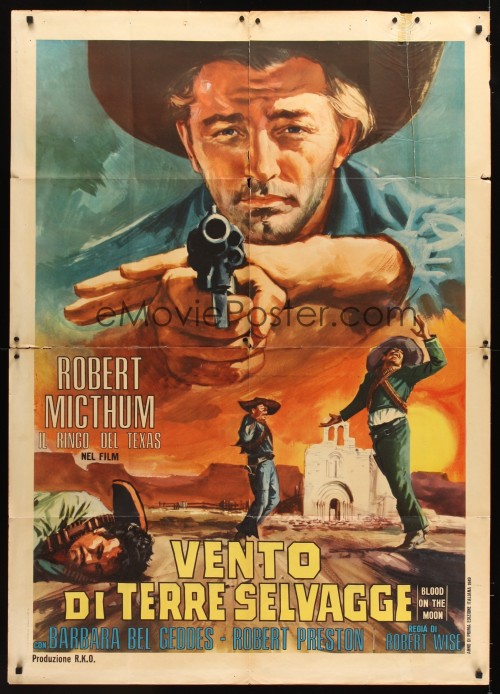
BLOOD ON THE MOON (1948)


 Picture Stolen from West of the River

The New York Times describes Blood on the Moon, “one of the best "psychological" westerns of the 1940s”. I’ve read this assessment from other sources as well. While I’ve turned this over and around in my head, I’m still not quite sure what it means.
Directed by Robert Wise (from an adaptation of Luke Short’s Gunman’s Chance by Lillie Hayward and Harold Shumate), Blood on the Moon stars Robert Mitchum as Jim Garry, a lonesome cowboy (and archetypal “Mitchum Good Guy Role”) who is first introduced to us on horseback and in the pouring rain, silhouetted against a steel gray sky. Making camp for the night beneath the shelter of the woods, he’s barely got his boots off before he has to climb a tree to escape a stampede of cattle. Coming up armed behind them is cowhand Bart Daniels (Lassie’s Robert Bray), who strongly suggests that Garry accompany him to his outfit’s camp. There he meets another pair of rifles, carried by steer boss John Lufton and Cap Willis (Tom Tully (Academy Award nominee for The Caine Mutiny) and latter-day Ed Wood regular Bud Osborne). “Make a fella feel right at home, don’t you?” says Garry.

He learns that Lufton was the main supplier of beef to the local Indian reservation but has since been kicked out by a new agent named Pindalest. Coincidentally, a guy name Tate Riling has been bringing in gunmen to support the local ranchers and homesteaders who sell through Pindalest. So, pardon the guns but, Lufton tells him, “It’s work for me or keep on riding.” As Garry is headed to the nearest town, Sundust, he decides on the latter. 

Lufton asks him the favor (and test) of delivering a note to his “womenfolk” over on his mesa spread along the way. There, Garry is greeted by Lufton’s younger daughter, Amy (Barbara Bel Geddes), who shoots at him to keep him from crossing the river. Circling behind her, Garry uses his own Winchester prowess to dance her back into the water to “cool off”. Once he delivers Lufton’s note to older daughter Carol, Amy shows up to give him his own dance lessons. “Guess I deserved that,” Garry says quietly. 

Things aren’t any less opaque in Sundust. Upon arrival, he’s immediately made for a gun hand apparently hired by Lufton in retaliation. Walking into the saloon, he becomes instantly aware of the tension. We’ve already been made privy to this because Walter Brennan (as Kris Barden) is sitting at the card table and he’s wearing his teeth, indicating a serious turn of events about to take place. Plus, unshaven Milo demands that one of his compatriots pretend to be Tate Riling, asking. “Want the law to come in here and find out what we’re doing?” Which isn’t the sort of thing honest folk would say, cards, teeth or not. Turns out that Tate himself had called for Garry, and since the two used to be partners, Jim sees through the masquerade immediately. Before long, people are turning over tables and crashing through doors. 

“Same old Jim,” says Tate, as his old partner steps out of the shadows. “When lighting strikes, you’re there.” Tate Riling is a man with big ideas. He’s partnered with Pindalest on a plan to set the ranchers against Lufton, and since Pindalest has already managed to revoke Lufton’s passthrough on Indian land, if his herd winds up across the mesa, the cattle will be seized by the U.S. Army. Faced with the choice of losing the herd or selling low, Lufton will have no choice but to accept Riling’s spontaneous offer of $4 per head. After which, Riling and Pindalest will make a profit after selling Lufton’s herd right back to the Indians. Jim is Riling’s whole card, and he’s willing to pay $10,000 to put it up his sleeve. “Lufton’s men are tough and my ranchers aren’t.” 

While Garry could certainly use the money, he isn’t keen on getting lumped in with nasty mercenaries like Joe Shotten (Clifton Young, Our Gang’s “Bonedust”) and Frank Reardon (Tom Tyler, who appeared as both Captain Marvel and The Phantom for the Republic and Columbia serials). Since Riling is played by Robert Preston, he really sells the job to Garry. “Shotten and Reardon get paid in gold eagles,” he says to Jim. “You get paid in thousands.”
“Yeah,” Garry replies. “The only difference between us is the price.” 

Now if you couldn’t tell by his second-billing or his being played by Robert Preston, Tate Riling is a bit of a snake and he’s playing both sides against the middle. Carol Lufton is in love with him, and he’s double-talked his way into convincing her that the fight is in her best interest too. After all, he’ll need money if they’re to get married, and her father has more than enough to spare. 

The next night, Riling and his men stampede Lufton’s herd back across the Massacree River, but both sides suffer losses. Bart is trampled and Bardens son falls off his horse and is dragged to his death. Lufton’s men remember him as a friend and a “nice boy”. In the morning, Garry delivers the news to Barden. “Big price to pay for a little bit of graze,” Barden whispers, then does some shaming: “I signed up with the little ranchers because I believed their fight was my fight. We ain’t being paid to fight, mister.”

When Garry has to stop Shotten and Reardon from gunning Lofton down in the Sundust streets, everything crystalizes for him. He tries to brush off Amy Lufton’s gratitude—“Don’t let a man’s whim fool you.”—but he can’t fool himself. Particularly after seeing the delight on Riling’s face. Knowing Lofton would never do business with him willingly, not even if forced to by the Army confiscation of his herd, Riling brought Garry in to intermediate. Now that Jim’s saved the older man’s life, Lufton will be obliged to work with the scheme. “It’s come all the way back around to here,” Garry says. “I’ve seen dogs wouldn’t claim you for a son, Tate.”

This magnificently-placed turn of phrase results in one of the most brutal fist fights the ‘40s have ever seen. (Possibly not to be rivaled until Richard Conte beats down Lee J. Cobb at the climax of Jules Dassin’s 1949 Thieves Highway.) The two men pummel each other with their fists until their knuckles are bloodied and broken. By the end, the winner can barely stand, dazed, hurt and looking hurt. Which is why Barden tells the bartender, “Give ‘im a minute,” before escorting him out of the bar. 


The remainder of the film plays out as most range-war dramas do. You won’t need a program to know the players or to predict the outcome. As far as the central story goes, it really is straightforward. But “psychological”? Well…

In 1947, Mitchum starred in an extremely dark Warner Brothers western titled Pursued, directed by Raoul Walsh with photography by James Wong Howe. Dark in both shadow and theme, Pursued involves the sole-survivor of a family massacred by very bad men and his desperation to avoid them in later life. In many ways, Blood on the Moon is not only considered to be a thematic follow-up to Pursued, but also RKO’s answer to the decently-received film. Like Walsh, Robert Wise took a fairly standard western story and presented it like a film noir, the hardboiled film genre that was all the rage in Post-War America. The movie is set predominantly at night, exterior day scenes are sparce and short—and RKO’s cheap rear-projection of mountain tops on close-up shots add an artificiality to the daylight. Inside the bars and cabins there are more swaths of shadow than there are characters. So much of that savage fight between Mitchum and Preston take place outside of the lantern light, with fists emerging from the black to evoke hard grunts and cries of pain from the receiver. 

Key to Blood on the Moon’s look is cinematographer Nicholas Musuraca, who sculpted with light and created the now-legendary fog-thick moods of Val Lewton’s masterpiece productions Stranger on the Third Floor (1940), Cat People (1942) and The Seventh Victim (1943), as well as one of the most perfect noir mysteries ever made, Out of the Past. As per film historian Eric Schaefer: “Along with Gregg Toland's work on Citizen Kane , Musuraca's cinematography for The Stranger on the Third Floor defined the visual conventions for the film noir and codified the RKO look for the 1940s. Musuraca's photography begins and ends with shadows, owing a major debt to German Expressionism, and can be seen as the leading factor in the resurrection of the style in Hollywood in the 1940s. The dominant tone in his work is black, a stylistic bias that lent itself to the film noir and the moody horror films of Val Lewton. But even within the confines of the studio system Musuraca succeeded in transposing his style to other genres. The western Blood on the Moon and George Stevens's nostalgic family drama I Remember Mama are both infused with the same shadowy visuals that Musuraca brought to the horror film in Cat People and the film noir in The Locket . Through the conventions of varying genres and the differing requirements of numerous directors, Musuraca maintained a uniform personal aesthetic.” His aesthetic has led Schaefer to further consider, “Nicholas Musuraca's name remains unjustly obscure among the ranks of cinematographers from Hollywood's golden age.”

At the time, The New York Times wrote, “Lillie Hayward's screen play, taken from a novel by Luke Short, is solidly constructed and by not over-emphasizing Jim Garry's inherent honesty, she has permitted Mr. Mitchum to illuminate a character that is reasonable and most always interesting.” The review further praises the rest of the cast, but where Bel Geddes is certainly spunky and atypical of the suffering female of the range war drama—this role is fulfilled by Phyllis Thaxter as Carol)—Mitchum and Preston manage to make the most out of what should be stock characters. To take nothing away from Short’s source novel or Hayward’s adaptation, the actors sculpt these characters from within. Preston never lets Riling’s malevolence slip to dastardly. He’s actually a pleasant sort and fairly easy going (until that “dog” comment). Riling is a man who has a great idea to strike it rich. He certainly doesn’t want or intend for anyone to get hurt, but if it happens, it happens. His love affair with Carol is as insincere and transparent as you can get, but his affection for his former partner is never in question, nor does he ever imply that Garry’s higher moral character is a sign of weakness or stupidity. There’s a genuine respect that Riling feels for Jim Garry. 

Mitchum, too, carves Garry out of deeds rather than words. We don’t know much about his past relationship with Tate, but we don’t have to. The men have a history that doesn’t need to be marred by hand-holding exposition. “Remember that time we…” The only catching up they do is to fill in the space between when they weren’t partners to their most recent meeting, and only then with a handful of words. Indeed, Garry is so tight-lipped that he doesn’t even let the audience in on whose side he’s on until he makes up his own mind. He has an altruism that doesn’t feed him during the lean times and maybe he’s even considered Riling’s Big Idea to be okay so long as no one really gets hurt. It’s not until Fred Barden and Bart are killed by actions he’s participated in, that he really starts to see how these things are fairing. The two actors can be witnessed thinking through their scenes and their character’s actions, and everything unfolds naturally. When their fight erupts, it comes with deep resentment, hurt and the need to prevail and make a point. This isn’t a typical Hollywood dust-up; these men aim to kill each other. And it’s only through outside intervention that they fail. Maybe this is the “psychological” part the critics referred to.

(Brennan, too, has a good turn midway through. His character Barden is the real deal, a tough bastard who carved his way of living out of the harshest of environments. He’s no shrinking, cowering townie from High Noon. When he receives news of his son’s death, you can see the years of regret and wasted effort welling up behind his words to Garry. Later, he definitely means it when he says, “I always wanted to shoot one of ya. And he was the handiest.”)

While it looks familiar, Blood on the Moon really is a tough film the chew through, and I don’t mean that disparagingly. It’s “leisurely pace”—to use the words most often used by its critics—is measured and steeped with a tension of upcoming violence. You feel it from the opening shot, before you even know who Jim Garry is, or what he’s doing so far out in the nothing and in the pouring rain.

Now, the movie is one of those famous copyright orphans. Having slipped through the legal cracks during RKO’s change of hands over the years, Blood on the Moon pops up on TCM every now and then—and before TCM, it was really hard to catch by chance on TV, believe me, I know—and if you dig deep enough into those 25-movie collections at the bottom of the Wal-Mart bins, you may find a cheap transfer of the public domain print, with its snowy “white dirt” noise and scratches that grow into visibly taped-up tears running through entire shots. Interestingly, the extreme high contrast of the print actually adds to the western’s noirish feel, making even the outdoor sequences on the mountains, feel constrained and claustrophobic. Certainly well worth keeping an eye-out.

Friday, December 28, 2012

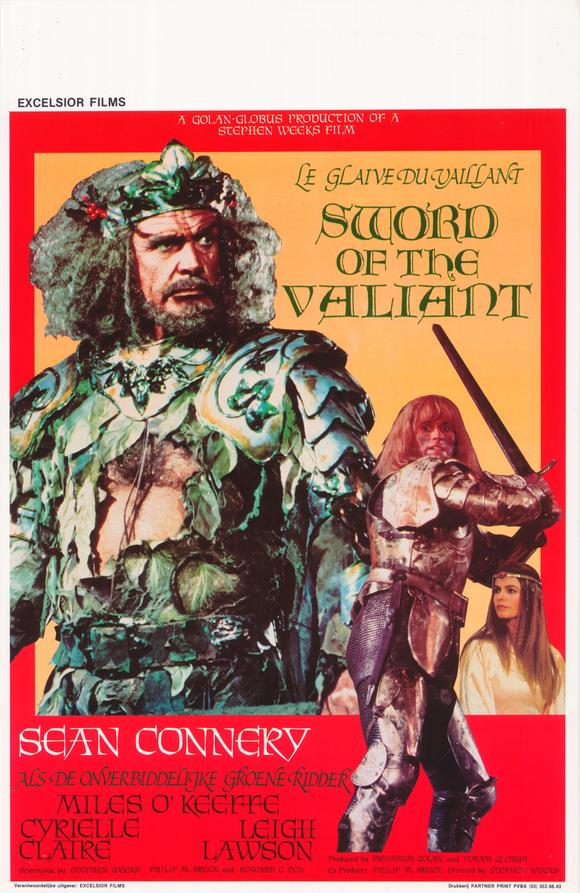
SWORD OF THE VALIANT (1984)

-->


The story of Sir Gawain, the bravest knight of Camelot, and his encounter as a squire with the mysterious Green Knight is one of the best-known stories in Arthurian legend. While it appeared in various forms, its definitive version comes from an unknown 14th Century author (known among academics as the “Pearl Poet” due to North West Midland dialect idiosyncracies in the stanzas, or more familiarly “The Gawain Poet”--J.R.R. Tolkien was a big fan and contributor to the poem's preservation), who wrote a long-form poem depicting the young knight’s adventure.
Gawain, a brash and wide-eyed youth, was but a squire in Arthur’s court on the New Year’s Feast when the Green Knight burst through the hall’s doors and proposed a wager. Who among them would take the Knight’s mighty axe, strike a single blow and behead him. The catch? “Should the power remain in his body” he would deliver a blow in kind within a year and a day. Bewildered and suspicious of the challenge, the other knights were hesitant to take up the challenge, but young Gawain, seeing the others injuring the King’s honor, accepted. But once he delivered the blow, instead of dying the Knight simply picked up his head, waggled the bloody part at Queen Guineviere, and told Gawain he would see him at the Green Chamber, the Knight’s fortress, one year and a day from then.
Instead of mourning his last year, Gawain decides to seize his remaining time. Rewarded by Arthur of a knighthood, Gawain set off on grand adventures of chivalry, honor and chastity. At several points during his wanderings, he finds himself tempted by seductive women, particularly the wife of a lord who has given him shelter. He rebuffs her three times and on the last night, she rewards his honor with a gift of a magical green girdle (or shirt or sash, it varies) that will protect him from harm. Hedging his bets, Gawain meets with the Green Knight on the appointed time. However, he flinches before the Knight can deliver his killing blow. Laughing, the Green Knight reveals himself to be the Lord who gave him shelter, that he knows Gawain is cheating by wearing the girdle and instead gives the lad a mild cut on the back of his neck, a reminder of his last-minute cowardice and a lesson in gallantry to the end.
Ultimately, the whole ordeal is revealed to have been a trick of Morgan Le Fay, the enchantress and Arthur’s sister, who wanted to embaress the King and frighten Guineviere. Gawain was just a pawn and yet emerged a hero despite his failings.
Sword of the Valiant  is the cinematic retelling of this classic tale.
Sorta.
A pet project of British director Stephen Weeks, he’d already filmed the tale once before in 1973 with Murray Head as Gawain, but a dispute between producers and studios hampered production and the film was never given proper distribution. So when Yoram Globus and Menahem Golan, the Israeli equivalents of Dino DeLaurentis, offered Weeks the opportunity to redo the movie, Weeks leapt at the chance. He loaded his cast with a handful of heavy lifters in British entertainment including Raiders of the Lost Ark co-star John Rhys-Davies, Peter Cushing in a completely sitting-down role as the Senechal, veteran character actor Trevor Howard as the King, and for the coup de gras, superstar Sean Connery (who was filming Never Say Never Again simultaneously) as the Green Knight. (He’d even managed to bring back Rhys-Davies’ fellow Raiders allum Ronald Lacey to reprise his role as the villainous Oswald from the previous incarnation of the film.) And while he really wanted Mark Hamill to round out the cast as Gawain, Messers Golan and Globus insisted on another international superstar to play the hero: Miles O’Keeffe. After his impressive and acclaimed debut in Bo Derek’s Tarzan, the Ape Man, not to mention all those stellar Ator movies, he was an obvious slam-dunk to play the role of one of the greatest knights in mythology.
Following the success of John Boorman’s Excalibur, Sword of the Valiant probably seemed great on paper. And it starts quite well with Connery’s magnificent entrance astride a white horse, his horned crown and armor glittering green, he looks magical. Good timing too, since “The King” (the name “Arthur” is never uttered, nor are any of the be-bearded knights), has just finished bitching that all his nobles have gone soft after wretched peacetie has settled over the land. “The Old Year limps to its grave ashamed,” he says, and demands to see some proof that knightliness exists within his castle walls. 

Bathed in emerald light, the Green Bond uses his axe to cut through a helmet, proving its sharpness. “Let any of you take up my axe and hack the head from my shoulders. One blow only. And if the power be left in me, I demand the right to deliver a blow in the same manner.”
When no one steps up, the King is about to accept but squire Gawain leaps to the rescue. He’s knighted on the spot and the Green Knight laughs. “I ask for a knight but what do I get? A youth that has not yet earned his beard.”
So Gawain beheads the Knight, a headless Connery picks up the (lousy animatronic) head and reattachs it (both the beheading and reheading are achieved by pretty fancy invisible cuts and whip pans). The Knight grants Gawain his year and even grants him a loophole. Gawain keeps his head as long as he can solve a riddle:

Where life is emptiness, gladness
Where life is darkness, fire
Where life is golden, sorrow
Where life is lost, wisdom

(Connery’s horse does not want to stand still during this poem.) And he tells Gawain to seize his year, “Only fools and priests squander life by fearing death.”
So off goes Gawain, his new squire, Humphrey (Leigh Lawson), and his new armor—all of which once belonged to King Maybe-Not-Arthur and leaves Too-Small-for-Camelot to “seek his beard”.
And oh! The adventures. Ten minutes from the castle, he requires a church key to remove his codpiece and relieve himself. And Humphrey just happens to have one. Then he decides to eat a unicorn, since, being rare and magic, it’ll probably taste better. But that creature disappears, a tent appears in its place and an Enchantress sends them to Lyonesse, for no real particular reason.
Gawain defeats the “Guardian of Lyonesse”—a land in which no man has entered nor cannot leave—leading to a circular logic that comes from updating medieval texts for the mass market—but after taking the wounded man back to the town, the dying Guardian points at Gawain and calls him his murderer. He’s able to escape the angry mob because the beautiful Linnet (French actress Cyrielle Clair clumsily dubbed) gives him a magic ring that lets him disappear but reveals him to the Eye of Sauron… no, wait, it just makes him disappear.
Anyway, other things happen. He rescues Linnet, then loses her. Then the Green Knight tells him using magic is cheating and not part of the game. So he gives it up, meets two of the dwarves from Time Bandits (David Rappaport and Mike Edmonds), they send him somewhere else, he rescues Linnet again and then loses her again, this time to the lustful Lord Oswald and his Senechal father (who wishes to use her to bargain with a rival lord, played by Rhys-Davies doing a Brian Blessed impression).
Then more stuff happens. A lot of walking left, then right, particularly in extremely claustrophopic stone corridors and staircases, which could come from shooting on location in real castles in Wales and France. He’s involved in numerous uninspired fights, clunky sword duels and one of the worst-shot battle sequences in recent memory (involving a cast of dozens!).
Along the way, Gawain uncovers the mystery of the riddle save the last stanza, earns his spurs (or beard, once he can grow one) and meets the Knight on the appropriate day. Only this time, he’s wearing a sash of invincibility that Linnet gave him, which allows him to cheat again, battle the Knight and finally learn how wisdom is acquired through loss of life.
And credits.
Though I have not yet seen Weeks’ previous incarnation of the story, I’m told that Sir Gawain and the Green Knight resembles Monty Python and the Holy Grail in terms of production value. Sword of the Valiant also has much in common with the quotable Pythonian-Arthurian take, but mostly accidentally. Everyone in it seems to be having a good time, particularly Connery, but O’Keeffe is slightly better in motion and silent than he is when having to deliver lines like, to his torturer, “Does your mother know what you do for a living?” Much of his delivery is stiff and sore-thumb contemporary. When he’s not talking, he looks okay in a romance novel-cover type of way, even when he’s trying not to fall over in his clunky armor (borrowed from Royal National Theatre and the Old Vic). But even taking that aside—I mean, who goes “Miles O’Keeffe! What a thespian!”—there are many moments where he cuts an impressive, knightly figure.
Even the clumsy action and photography can be forgiven, particularly with a modern eye, as the staging and angles call to mind some of Robert Taylor’s bosoms-and-armor pics like Knights of the Round Table or even Ivanhoe. They’re costume dramas and at heart so is Sword of the Valiant. The lame attempts to modernize the dialogue aside, it’s an earnest attempt at a story of chivalry, even if most of the source material is jettisoned in favor of Gawain’s and Linnet’s love story.
If you drop all of the niggling faults, there’s an interesting allegory going on under the surface that actually does call to mind the endless interpretations of the original poem. Scholars over the years have called Gawain and the Green Knight a Christ analogy, an early work of feminist literature (due to Morgan Le Fay calling the shots and even in young Gawain’s passive nature), even an early look at queer literature (though given the time it was written, this has been determined to be quite a stretch), due to a subplot in which Gawain must deliver a kiss to the Lord harboring him. The Green Knight is usually interpreted as the Green Man of European folklore, the guardian of the woods and an embodiment of nature. Sword of the Valiant takes this course as well. While the climactic scene seems rushed (likely due to Connery’s schedule on the non-Bond Bond movie), as the Green Knight dies from his wound, his green fades to white and he starts to crumble like snow, leaving the idea that The Green Knight was Gawain’s entire borrowed year. It’s an interesting idea and it even allows for a rewatch (which does reveal little hints to this end throughout), but by this point, you may done the first time through.
But, wait Mike, if this movie isn’t all puppies and blowjobs, why bother seeking it out? Good question, particularly due to the controversy surrounding the domestic DVD release. For all its missteps, Sword of the Valiant was gorgeously shot in 2.35:1 widescreen and makes wonderful use of the real locations (in some scenes anyway). But since it did bupkis at the box office and is pretty much reviled, the only way to get it is to locate the out of print DVD which, of course, is in an ugly cable-adapted pan-and-scan version, leaving one to focus solely on faces and acting. There is a silver lining for collectors with multi-region players: a 2.35:1 DVD is available as a Polish import and sometimes that version shows up on YouTube.
So to answer my self-posed question: that’s my riddle for you. See you back here in a year and a day. 


Tuesday, December 18, 2012

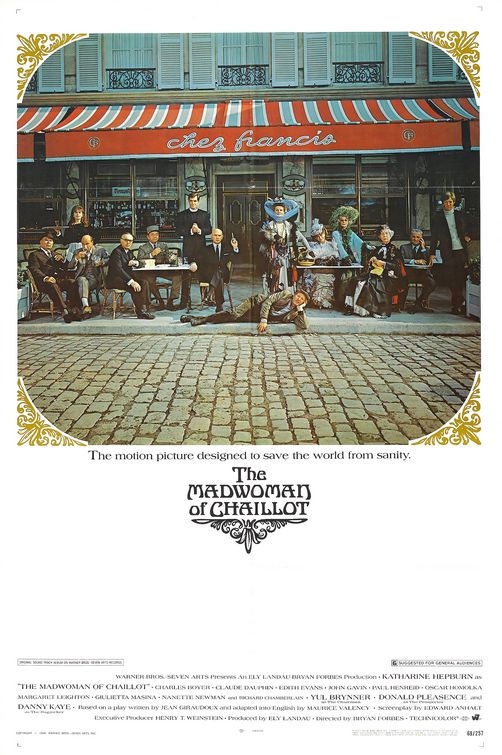
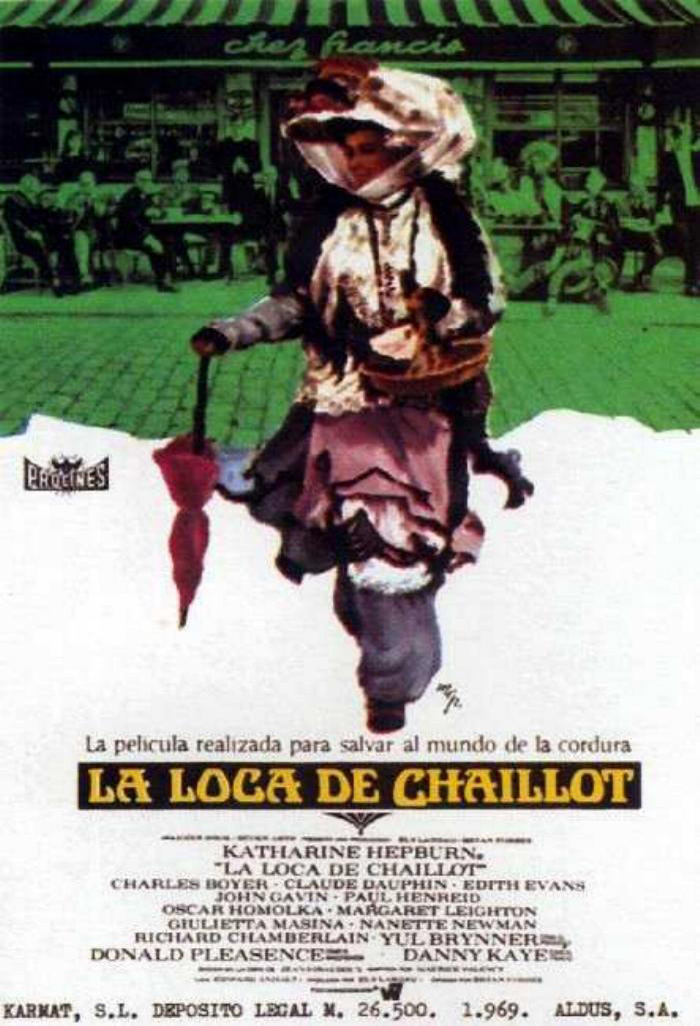
THE MADWOMAN OF CHAILLOT (1969)

-->
“This is the story of the triumph of good over evil,” we are told by the opening titles. “Obviously it is a fantasy.”
It is said that Molière and La Fontaine used to frequent the Cafe de l'Alma in the Chaillot district of Paris. But today it is visted by a group of leaders, including The Chairman (Yul Brynner), The General (Paul Henreid), The Commissar (Oskar Homolka), and The Prospector (Donald Pleasence), who privately refers to them as, “Just faceless, ordinary monsters.” Together, they form the Board of Directors of International Substrate, and they have hatched a plan to dig up Paris in order to get to the oil that lies beneath the city.
Now, it is well known that all districts of Paris have their own dotty protectors, the Madwomen, if you will. The titular "Madwoman of Chaillot" is Countess Aurelia (Katharine Hepburn, in her best performance as far as I'm concerned), who prefers to live every day as one specific date. “First, the morning paper. Not these current sheets full of vulgar lies. I always read the Gaulois for March 22, 1919. It’s by far the best. Delightful scandal. Excellent fashion notes. And of course the last-minute bulletin on the death of Leonide Leblanc. She used to live next door. And when I learn of her death every morning it gives me quite a start. To recover from which, Chaillot calls. It is time to dress for my morning walk. That takes much longer without a maid . . .”
She’s not so mad as to imagine that life really is the same as that one March morning. Time is passing, of course, but it’s not like she has to acknowledge it. “Of course, in the morning it doesn’t always feel so gay. Not when you’re taking your hair out of the dresser and your teeth out of the glass. And particularly if you’ve been dreaming that you’re a little girl on a pony looking for strawberries in the woods. But then comes a letter in the morning mail. One you wrote to yourself, giving your schedule for the day. Then, when I have washed in rosewater and put on my pins, rings, brooches, pearls, necklaces, I’m ready to begin again.”
The Prospector’s son, a radical activist named Rodrick (Richard Chamberlain), brings the Board’s scheme to the attention of the genteel lady, as well as her cadre of peers, including the waitress Irma (Nanette Newman), the Folksinger (Gordon Heath) and her most confident of confidants, the Ragpicker (Danny Kaye). “The world is being taken over by the pimps,” says master Ragpicker.
The Countess is appalled, “The world is unhappy? Why wasn’t I told?”
So distraught is she by this news of scheming, of men living life as if it was disposable, Countess Aurelia gathers the other Madwomen of the districts—Josephine, the Madwoman of La Concorde (Edith Evans), Constance, the Madwoman of Passy (Margaret Leighton), (Josephine, the Madwoman of La Concorde (Edith Evans), and Gabrielle, the Madwoman of Sulpice (Giulietta Masina). Together with the street people, her people, she desides to hold a trial for these despoilers, in absentia. The rich men and their destructive ways are represented by The Ragpicker.
“Criminals are always represented by their opposites,” assured Josephine, who was to be the judge. The trial was absolutely necessary, for something had to be done.
“If you kill them, they’ll be missed,” protested Constance. “And we’ll be fined. They fine you for every little thing, you know?”
To which the Countess replies, “Do you miss a cold when it’s gone? They’ll never be missed.”
Thus, the Ragpicker prepares the case, defending against the charge that he and his ilk worship money.
“Worship money? Me?” says the Ragpicker. “I plead not guilty! I don’t worship money. It’s the other way around. Money worships me. It won’t let me alone. The first time money came to me, I was a mere boy. Untouched. Untainted. It came quite suddenly when I innocently picked a bar of gold bullion out of a garbage can while playing. As you can imagine, I was horrified. I tried swapping it for a little, rundown one-track railroad. To my childish amazement this immediately sold itself for a hundred times its value. I made desperate efforts to get rid of this unwanted wealth. I bought refineries, department stores, every munitions factory I could lay hands on. The rest is history. They stuck to me. They multiplied. And now I am powerless. Everyone knows the poor have no one but themselves to blame for their poverty. But how is it the fault of the rich if they’re rich? Oh, I don’t ask for your pity. All I ask for is a little human understanding.”
He continues, “Ah, without money nobody likes or trusts you. But to have money is to be virtuous, beautiful, honest and witty. To have none is to be ugly and boring and stupid and useless.”
“One last question,” asks the Countess. “Suppose you find this oil you’re looking for? What will you do with it?”
“I’ll make war! I’ll destroy what remains of the world!”
When the trial concludes the verdict is clear: guilty. But how to carry out the sentence, and what shall the sentence be?

The Madwoman of Challot began life as the play, La Folle de Chaillot, written by acclaimed writer Jean Giraudoux and was first performed in Paris in 1945, a year after his death. In 1949, fellow playwright Maurice Valency adapted the story into English and it was warmly received in the United States. Subsequently, the play was reworked by Inherit the Wind authors Jerome Lawrence and Robert E. Lee (with music and lyrics by Jerry Herman) into the musical Dear World, which won star Angela Lansbury a Tony Award. That same year, 1969, screenwriter, producer and pulp writer (with wife Edith), Edward Anhalt (The Boston Strangler), adapted the Valency script for the big screen, which was directed by Bryan Forbes (Séance on a Wet Afternoon). The film premiered in October, was met with favorable reviews from critics and not-too-shabby attendence, then quietly bowed out of the limelight, fading away with the final breaths of the “Summer (and Autumn) of Love”.
Anhalt’s screenplay adheres closely to Giraudoux’s play and embellishes only where he needs to. Just the same, spending the first act with the odious Board members gets a little tedious. While it is indeed fun to watch Brynner rail against the indignities he must suffer every day when exposed to the world’s rabble, the sequence becomes a slog. After about ten minutes, you’ll catch yourself saying, “I get it. They’re evil, cruel capitalists. What else is new?” But if you can stick with the movie until Hepburn’s marvelous Countess is introduced, the movie becomes a delightful ride from there. Until it slows down again with the introduction of the other Madwomen. Their first scene together unfortunately drags as well, mirroring the Board’s callousness with their own fractured-mirror outlooks on life. But the reward for coming this far is without question Danny Kaye’s moment as the Ragpicker during the trial. Assuming the collective persona of all cruel overseers and misers, the Ragpicker seems to shock himself by the end with the imperious self-righteousness he finds within. It’s a chilling moment of black comedy and the centerpiece of the film (as, I’m sure, it was the centerpiece of the play) and Kaye left me breathless, at least. 
 
The particulars of The Madwoman of Chaillot are, unfortunately, timeless. The rich will always run roughshod over the poor and life is wasted on the forward-thinkers, only appreciated by the young and the mad. And while the underlying themes are also universal, this particular movie seems more appropriate today than it might have in the post-war Paris of the ‘40s or mid-war America of the late ‘60s. The Madwomen and the street people, including the idealistic Irma and Roderick, could easily fit the mold of the modern “Occupy” movement; the Board of Directors are an easy surrogate for Wall Street and Corporate Culture. As the opening title card points out, almost bitterly, the results are pure fantasy.
While Anhalt invented scenes involving The Prospector and his son inside their home (where Pleasance’s character collects and displays old bathroom doors, hanging them on the wall as modern art), they wisely resisted the temptation to update the play for modern times. The Café and the Countess’s domiciles exist in stasis, the first eternally quaint and the latter decaying along with its owner’s mental stability, yet still retaining its dignity. Certainly Roderick and the Board members are given a more modern cut of suit, no hippies or swinging Londoners lurk in the background of the frame. The story stays put in its fantasy time period and could be easily trotted out for any generation.
Unfortunately, it really could be applied to any generation, as class warfare is less cyclical than it is a never-ending hypno-spiral. But how lovely would it be if we could just round up our ruthless rulers, bankers, despoilers and pimps and just march them off the end of the Earth? It’s of course an insurmountable solution. The best we can do is get up, dress up in our best, and pick a personal time from our past where life was perfect, without the simple evil of reality shattering our illusions of happiness.
For therein lies the true tragedy of The Madwoman of Challot: in the end, the Countess’s world has been intruded. Tomorrow may again be March 22, 1919, but it won’t change the fact that yesterday was quite gloomy, cold and hard.
Again, we must bow our head in silent prayer to the Warner Brothers Archives for preserving this handsome oil painting brought to life (thanks to the photography of Burnett Guffey and Claude Renoir). At the moment, it’s available as one of their movie-only standalone DVD-Rs, but it’s better than nothing at all. Amazon also has made it available on their Instant Video Service.
For another take on the story, be sure to check out the novelization on Richard Chamberlain’s website.


Tuesday, December 4, 2012

EDDIE PRESLEY (1992)


Nobody in Hollywood is what they are; they’re always something else.
Waitstaff are actors, security guards are screenwriters, guys who set up shop in diner booths aren’t oddballs, they’re agents. The street dancers, the buskers, the living statues, all living on “donations” from passers-by, they’re all in the business. “You have to remember that show business is all a show and it’s all business,” says Sal-the-Agent (Clu Gulager) to one of his many fresh-off-the-bus prospects. “It’s both a show and a business. I tell all my clients that. I’m an agent but I’m also a professional communicator.”
All across the world, people have that famous HOLLYWOOD sign in their eyes, and the sign is surrounded by stars, literally and figuratively. The Muppets called it “The Magic Store”. It’s where dreams come true. Where beautiful girls are discovered at soda fountains. But the further down the hill you get from those famous white letters, more litter is visible, and those names on the stars on the Walk of Fame become less-familiar as you go. The most-devoted can be found hosing condoms off of Ann Sheridan’s star. And, in an image that sums up the primary theme of the film, our title hero brushes cigarette butts of the star belonging to Elvis Presley. Where once were legends, today nobody gives a damn. It’s worse for the has-beens, but not as bad as the never-weres have it. At street level, that dream Hollywood’s been pitching for a hundred years—that anyone with talent and heart can be a star—is as faded and tattered as its namesake boulevard. It’s a town of dreamers and ghosts. 
Eddie Presley (Duane Whitaker) is not just a down-on-his-luck security guard living out of a van parked behind the Frederick’s of Hollywood building. He’s lounge star waiting for his comeback: an Elvis impersonator who got into that game before there was even a demand for it. He played all the big rooms. “Okay,” he amends. “Maybe not the big rooms, but small-to-medium rooms all over the country. All over the country!”
In recent days, he pumps his breakfast money into a pay phone to check an empty answering service, stuffs the junk mail in his PO Box into the holes in his shoes. Whatever’s left, he gives to a homeless guy, out of kindness and sympathy, only to have the bum throw it back at him in outrage: “What am I supposed to do with a fucking quarter?”
Eddie’s girlfriend (Stacie Randall billed here as Stacie Bourgeois), who goes by the stage name of Tyranny, works double and triple-shifts as a diner waitress. Everyday she dodges the regular human debris—a goggle-eyed maybe-biker, maybe-skin head named Ace; Sal the Agent set up in his office in his regular booth, taking calls on the diner’s payphone. On her breaks, she sits with a lesbian friend (Julie Rhode-Browne ) who is trying to convince her to “make her start” in porn. “A lot of actresses do it that way,” she insists. 
To make ends get slightly closer every month, Eddie works graveyard security shifts at a warehouse, but the supervisor has it in for him. He’s already on probation for taking a shower on the job at 2am. For the most part, his co-workers like him, particularly female guard Becky, who practically throws herself at him, though he barely notices. Eddie’s too preoccupied with a call that never seems to come, something that will usher in his comeback Elvis act. 
Eddie’s dying for that call, a little more every day. His old friend owns a club called “Doc’s Back Door”, and he’s always looking for new acts. Doc spends his days auditioning an endless parade of hopefuls alongside his even more critical Mexican bartender, Smokey. First there’s the horrible ventriloquist who berates the dummy when the lines don’t come out right. There’s the performance artist whose schtick involves a cockroach representing Iraq and a knock-off brand of RAID representing U.S. involvement. (Doc: “You get out of here, you commie bastard! We kicked ass in the Gulf!”) The only act Smokey likes is a shock comic (played by Tim Thomerson—“I went to a very sexually-liberated college. It was called ‘Fuck U’!” (“Hey, I do some clean material, too. I once opened for the Cowsills.”) The only act Doc likes is a smarmy cruise liner agent named “Keystone the Magnificent” (played by Daniel Roebuck)—“I taught Doug Henning my best stuff. He stole ‘em, that bastard!”  
Meanwhile, Tyranny’s own bitter frustration—“Serving shit food to shit people all day long!”—is sucking him dry. “My life is out of synch,” she tells him. Becky shows her interest in him by trying to relate to his act: “I’m a singer. Kind of an easy-listening type,” she says. “Maybe I could be your… backup singer?” At the end of a long day, Eddie doses off at work and Supervisor West (Lawrence Tierney) captures the moment on Polaroid. And why the cruelty from him? “Because I don’t like you, Presley! You’re one of those wanna-be Hollywood faggots. You’re a loser and you’ll always be a loser.” Maybe West had a dream deferred himself some time ago, so he does his best to revenge it by stomping upon the dreams of everyone around him, even those just trying to get by.
When Eddie finally gets that call from Doc (the wonderful Roscoe Lee Browne), his security guard buddies couldn’t be more supportive. Nick and Scooter (Willard Pugh and Ted Raimi) raise money to get him a stretch limo for the big night. Becky plans to get all dolled up for the occasion. The humiliation continues to pile up, though. He hands Sid his mock-up flier, invites him to the show, only to have to ask for it back so he can make copies. Tyranny can’t get off work and won’t be there. His dry cleaner agrees to come so long as he can get in for free. Worst of all, he’s billed beneath Keystone on the slap-dash marquee.
Then comes the big night and out comes Eddie Presley—King of the Kings—opening with a Southern medley and killing. Then the club’s cassette player eats his back-up music tape. At a loss, on the verge of panic, Eddie sits down with his accoustic guitar and opens up to his dwindling single-digit audience, and he lays bare the story that up until now we’ve only gotten glimpses of: a son he never sees, a business he no longer owns, a nightmare asylum where he lived after hearing the news that his hero—his Messiah—died in 1977. On stage, Eddie Presley becomes who he really is.
And anyone who has ever undertaken some sort of public art—musical performance, art installation, stand-up, film screening, play premiere—will for a few minutes share that space with Eddie. Anyone who has ever given voice to their art to a near-empty room, leaning solely on the support of the handful of family or friends who have come out of whatever—respect, love, pity—you’ll recognize that lonely spotlight and the agony of never giving up and never knowing why.
Whitaker opened up his original one-man play with director Jeff Burr to create this tone poem ode to disappointment. Described by The Quentin Tarantino Archives as “the story of a man who didn't make it back up after he fell down”, Eddie Presley is about the potential danger of following your dreams without a plan. By his own admission, Eddie gave up his family and lucrative career because he “wasn’t happy”, and took that unhappiness to its most illogical of conclusions. But since Hollywood is filled with the shattered remains of ill-conceived dreams, he’s lonely but never alone. His tunnel-vision is no different from anyone elses “out there”, which is why he focuses on his distant girlfriend with “attainable beauty” and cannot see the genuine affection his plain “friend” Becky has for him. He sees just how empty Doc’s room is during his act, but doesn’t really see the standing ovation he gets from two friends. Raimi and Pugh give beautiful if wordless performances as they watch Eddie on stage—in their eyes, he is living a dream they don’t dare pursue.  So many people around Eddie call him a loser behind his back but who are they to judge? Who is Sid the Agent who “handled them all” (from Freddie Bartholomew to Anne Francis)? Who is Keystone the Magnificent who sets his glove on fire on stage and gets savaged by the rabbit within his hat? Who is Smokey the bartender to have such disdain towards those, in his vast esteem, “suck”? Indeed, who are any of us to judge anyone following their dreams, however misguided they may be? The irony in the film is that Eddie, like Rupert Pupkin or Mickey One, is actually a pretty good performer, but the fates are not on his side. Kim Kardashian has never done one thing of note during her entirety of her existence, but she stands far above this broken dreamer alone on a dive-bar stage. 
You don’t need a Ph.D. in Jeff Burr to be able to see Eddie Presley for the personal project that it is. First came Whitaker’s play, where he poured out his own personal pain. Then Burr’s adaptation, which came on the heels of a creatively-disappointing string of franchise sequels—The Texas Chainsaw Massacre, Stepfather 2—where he had no control over the final cut nor the wishes of those “suits” above him. “[The Offspring, Straight into Darkness and Eddie Presley] are more representative of what I want to do and am capable of doing,” Burr told Icons of Fright. “The frustration for me is to not be able to be allowed to put the creativity you know you have on the screen, for various reasons. That’s the frustration.”
But with all the pathos and desperation in the movie, you can tell from the cast how much the principal creators were and are. Browne, Tierney, Gulagher, Thomerson, Roebuck, Raimi, Kitten Natividad—even very brief cameos by Bruce Campbell and soon-to-be-legend Quentin Tarantino—all appeared for very little money. Michael Varrati (Master of the Massacre: An Interview with Filmmaker Jeff Burr ) asserts that Burr “somehow managed to put together this “Ocean’s 11 of cult” ensemble”, to help Burr and Whitaker get their 16mm epic off the ground. and at no point does the story take the easy way out. you know very well that at the end of his performance, Eddie’s existence will probably not change. there won’t be a rush of agents or even a steady gig to come of it all. But that time in the spotlight may very well have been worth it all in the long run.      
Bill Gibron, a critic I respect immensely, wrote in his review, “Eddie never really gets a transcendent moment, a chance for the film to combine its incredible elements to lift you out of the story and into something more special. We keep waiting for it to come and it never quite does. The movie pushes it, though. It comes awful goddamn close, so close in fact that you could get confused and claim to experience the inspirational, when in reality it was all a ruse, a cinematic sham caused with jumpsuits and jokes. Indeed, what Eddie Presley may need is more proof of our hero's music and mimicry.”
It’s a valid criticism, but it’s not one that I share. To tip its hand and show Eddie as a competent Elvis would have undercut the film’s third act punch (and just because I’ve told you about it won’t lessen the squeeze upon your heart during viewing) With Eddie Presley you have a movie that, like the dead talent on the Walk of Fame, you don’t see much of these days. And to give Eddie’s story a moment of inspiration would be grossly disingenuous. This isn’t a larger-than-life story; it’s one that’s actual size, far too intimate for gross grandeur. It’s a story that’s sensitive without sentiment; cynical without cruelty. Even though it’s set in Hollywood, don’t expect a Hollywood ending. 

[Special note for Pittsburghers: Eddie Presley is playing on a double-bill with Henrique Couto's Depression: The Movie, Friday, December 7 starting at 7pm at the Hollywood Theater in Dormont.]