Showing posts with label black comedy. Show all posts

Wednesday, November 28, 2012

DUST UP (2012)

 
In 2008, Roger Ebert wrote a piece for his SunTimes blog titled, “This is the dawning of the Age of Credulity”, in which he relates a conversation he had with Taxi Driver author Paul Schrader.  “He told me that after Pulp Fiction, we were leaving an existential age and entering an age of irony. ‘The existential dilemma,’ he said, ‘is, 'should I live?' And the ironic answer is, 'does it matter?' Everything in the ironic world has quotation marks around it. You don't actually kill somebody; you 'kill' them. It doesn't really matter if you put the baby in front of the runaway car because it's only a 'baby' and it's only a 'car'.’ In other words, the scene isn't about the baby. The scene is about scenes about babies.”
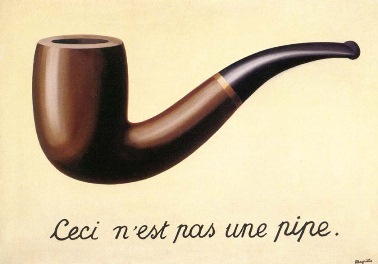
Which I feel was more than adequately boiled down by Rene Magritte in his painting, The Treachery of Images (La trahison des images, 1928–29), a painting of a pipe which he captions, "Ceci n'est pas une pipe": “This is not a pipe.” And it isn’t. It’s a painting of a pipe. “The famous pipe,” Magritte lamented. “How people reproached me for it! And yet, could you stuff my pipe? No, it's just a representation, is it not? So if I had written on my picture "This is a pipe," I'd have been lying!” (Torczyner, Harry. Magritte: Ideas and Images. p. 71.)
Taking this all further, Ebert noted about the cinematic culture around him, “We may be leaving an age of irony and entering an age of credulity. In a time of shortened attention spans and instant gratification, trained by web surfing and movies with an average shot length of seconds, we absorb rather than contemplate. We want to gobble all the food on the plate, instead of considering each bite. We accept rather than select.”
Modern movies, from this point of view, are neither self-contained nor created in a vaccuum. Every movie is made of particles from other movies. “Homage” has moved beyond the in-joke, background detail or set-piece and into literal and thematic presentation. So much of this is personified by Quentin Tarantino and his contemporaries. They’re not making movies, they’re making their versions of movies that had come before. “I told Robert [Rodriguez], ‘You made your Fistful of Dollars with El Mariachi, now’s the time to make your epic, your Once Upon a Time in the West”, sez the world’s most successful fanboy on the audio commentary for Once Upon a Time in Mexico. It’s like the self-referential humor of The Family Guy: “That’s funny because I get it.” The Inglorious Basterds was neither a remake of The Inglorious Bastards nor simply a World War II adventure, but it was Tarantino’s WWII movie. Coming up is Tarantino’s spaghetti western, Django Unchained
For better or worse, we’re slowly coming out of the age of irony and/or credulity because the most recent crop of movie-goers, including but not limited to the Twi-hards, are simply unaware of what came before, so every movie cliché is new to them. I remember a Twilight fan swooning over Edward because, “When he says cheesy stuff, it’s sincere because he doesn’t know it’s cheesy!” And thus we get Total Recall for this generation, Red Dawn for this generation. And this generation doesn’t know that they’re cheesy retreads, thus, they’re sincere. 
All of this is a backhanded way of introducing Ward Roberts new film, Dust Up, because it lands somewhere between ironic and post-ironic. Produced through his Drexel Box production house, Dust Up at first glance is a loving send-up of ‘70s exploitation, the “grindhouse” genre that is all the rage. Ironic because it takes the market-driven selling points of gratuitous sex, violence and mayhem and embraces them. Post-Ironic because it takes the most ludicrous of these elements to their logical conclusion. And post-credulous because it does it with sincerity, honesty and a passion for all of the sources that came before it. And in the end, Dust Up is not “Ward Roberts’ exploitation movie”; Dust Up is Ward Roberts’ Dust Up. It takes all the other-movie particles and molds them into something from his point of view and his sensibilities, and those of his collaborators, and makes something that’s both familiar and outrageous at the same time, but never seems derivative. It’s a balancing act to be sure, and on either side of the tightrope lies disaster. Fortunately, Roberts and company manage the middle walk very well. 
Dust Up is about the accidental—if not destined—collision of five people. New mom Ella and her junkie husband Herman, and two opposing forces: the stoic and enigmatic peaceful warrior Jack (Aaron Gaffney) and his Indian sidekick Mo (Devin Barry) on one end; the twisted and gleefully evil narcissistic personality Buzz on the other. Jack wears an eyepatch, a constant reminder of a tortured past as a violent soldier; Mo wears a Jay Silverheels outfit and yellow-striped tube socks, to both honor and mock his Native American forebears who have gotten rich and fat off of casino living. Buzz (Jeremiah Birkett) ingests chemicals, tortures people and declares everything to be his: “This is MY house. The House of Buzz. In the Land of Buzz. In the Time of Buzz.” 
Ella (Amber Benson) is a young mother living in a house with severe plumbing problems. Her husband Herman (fellow filmmaker Travis Betz), a roadie for Hoobastank (of all things), went a little loopy after the birth of their daughter, Lucy, and is now holed up at Buzz’s in a drug-induced, debt-heavy sabattacal. In need of clean water, Ella picks Jack’s name out of the phone book—the way of this peaceful warrior is that of the handyman. This is before Ella learns of her deadbeat spouse’s debt to psychopath, Buzz. Actually, Buzz is much more than a psychopath, more than a sociopath. He’s a charismatic, amoral, self-affirming bar owner-cum-cult leader who promises those he doesn’t like—or happens to notice—with death via dismantling at the hands of his chief thug, Mr. Lizard. What’s more amoral than a sociopath? An anthropath, perhaps? Whatever, you don’t want to owe money to Buzz. 
You know what annoys Buzz more than being owed money? Owing money to someone else. In this case, the corrupt, racist Sherriff Haggler (The Hills Have Eyes remake’s Ezra Buzzington), who wants his payoff and demands it in a most demeaning fashion. The laws of physics dictate that shit rolls downhill, to Buzz calls in poor Herman’s marker, gives him 24 hours to get the money and then has Mr. Lizard eject him from the bar in a most unfriendly fashion. 
Over the course of a few scenes, Jack becomes involved in Herman’s plight because it has become Ella’s plight. Jack is cut from the same cloth as most wayward heroes on the path of redemption—particularly Shane, according to an interview with Roberts at the Daily Grindhouse—so he isn’t likely to leave a damsel in distress. Before you jump to conclusions, he’s doing this out of pure spirit. Yes, Herman is a junkie, a bad husband, irresponsible, lazy, most likely unwashed and very much an ungrateful jerk, but these facts aren’t lost on anybody. The deeper he drags Jack (and Mo) into his pit of karmic despair, the more everyone—even Buzz!—questions why they’re bothering to help him out at all. The lesson to be taken away is if you’re going to be a selfish schlep of a person, you’d better have a pretty and capable wife and an adorable baby at home. Otherwise even Mother Theresa would be inclined to throw you to the wolves. 
As can be expected, things spiral out of control, epically and apocalyptically. Jack attempts to make good on Herman’s debt by lending him half of the money he owes Buzz in a show of good faith, but Buzz isn’t one to focus on problem-solving. In a matter of minutes, the casual morning meeting results in Buzz accidentally blowing up his bar—it’s a Rube Goldberg-esque chain of cause and effect, but the end result is that Buzz accidentally shoots one of his meth chemists mid-cook and, as we all know, meth is a most volatile and tempermental chemical potion. Emotionally, it’s the fourteen-year-old-girl of drugs.
The rest of the film could be titled “Buzz’s Bad Day”, as he punishes everyone in his path for his own misfortune. He and reason aren’t even in the same time zone, and if you’re wondering if depravity has a baseline, as far as Buzz goes, the answer is ‘no’. He does know how to whip up a freak frenzy. Unfortunately, he doesn’t choose his followers wisely. Drug-addled desert-scum aren’t known for their stamina, no matter how many barbecued human bodies they’re fed. This is best demonstrated when Buzz declares, “It’s orgy time!” and receives the same dismayed reaction as if he’d announced a pop quiz. 
Dust Up was obviously crafted to be a fun time for all, and it’s one of the rare movies, indie or otherwise, that is as much fun to watch as apparently it was to make. Behind it all are smart filmmakers who know which conventions to turn on their heads and which ones to embrace. As wacky as Dust Up is it never once tries to act like it’s better than either the genre or its audience. Unlike recent “grindhouse” movies like Hobo with a Shotgun, Dust Up wasn’t designed as a party tray of excess and nihilism. It asks you to care about its characters and then gives you characters to care about. Every one of the actors is pitch-perfect in their performances so it’s hard to single any one out. Gaffney’s a terrific hero archetype, violently opposed to violence lik Billy Jack, but with the smooth vocal tones of Joel McCrea. Barry brings just enough dry wit to Mo to comment on the insanity of things—even his own actions—without becoming hipster about it all. As Herman, Travis Betz—whose amazing allegorical demon cabaret, Lo (starring Birkett as the title character), introduced me to the majority of the versatile cast—gives the jerk of a catalyst an affability that earns a little bit of redemption at the end. Birkett doesn’t so much steal every scene he’s in as he attempts to corner the market on it. Buzz could all too easily be a cartoon villain, the word “Evil” given bushy eyebrows and pop eyeballs, but Birkett hints at a humanity buried deep beneath the viciousness and drug-induced paranoia. Both he and Jack project a loneliness and sense of loss, making them each other’s dark mirror. Perhaps the hardest job was placed on Benson’s shoulders. The filmmaker/author has the dubious honor of portraying the lone sane person in this sea of multi-colored insanity. Like Bob Newhart in all incarnations, she’s the only rational one in the room at any given time, and she does it with a sense of humor that anchors all the madness together. 
Roberts, Betz and Benson not only love film but understand it as well, as they’ve proven through this movie and previous offerings like Betz’s Joshua and Benson’s Drones (which she co-wrote and directed with Adam Busch). They’re not into the popular mash-ups of movie iconography and theme so much as they are into creating new forms from previously-used clay. As far as Dust Up goes, Roberts has taken the history of movies he loves and built upon it, rather than attempt to reflect it in some mirror he fractured himself. The result is both familiar to those who know the territory and unique at the same time. A ‘70s sex ‘n death-fest with an altruistic attitude taken from Howard Hawks westerns. A salute to what came before even as it moves forward. 
As the saying goes, “This is Dust Up. There are others like it, but this one is…” Roberts’, Drexel Box’s, and now ours. 

Tuesday, November 27, 2012

KILLER JOE (2012)

 
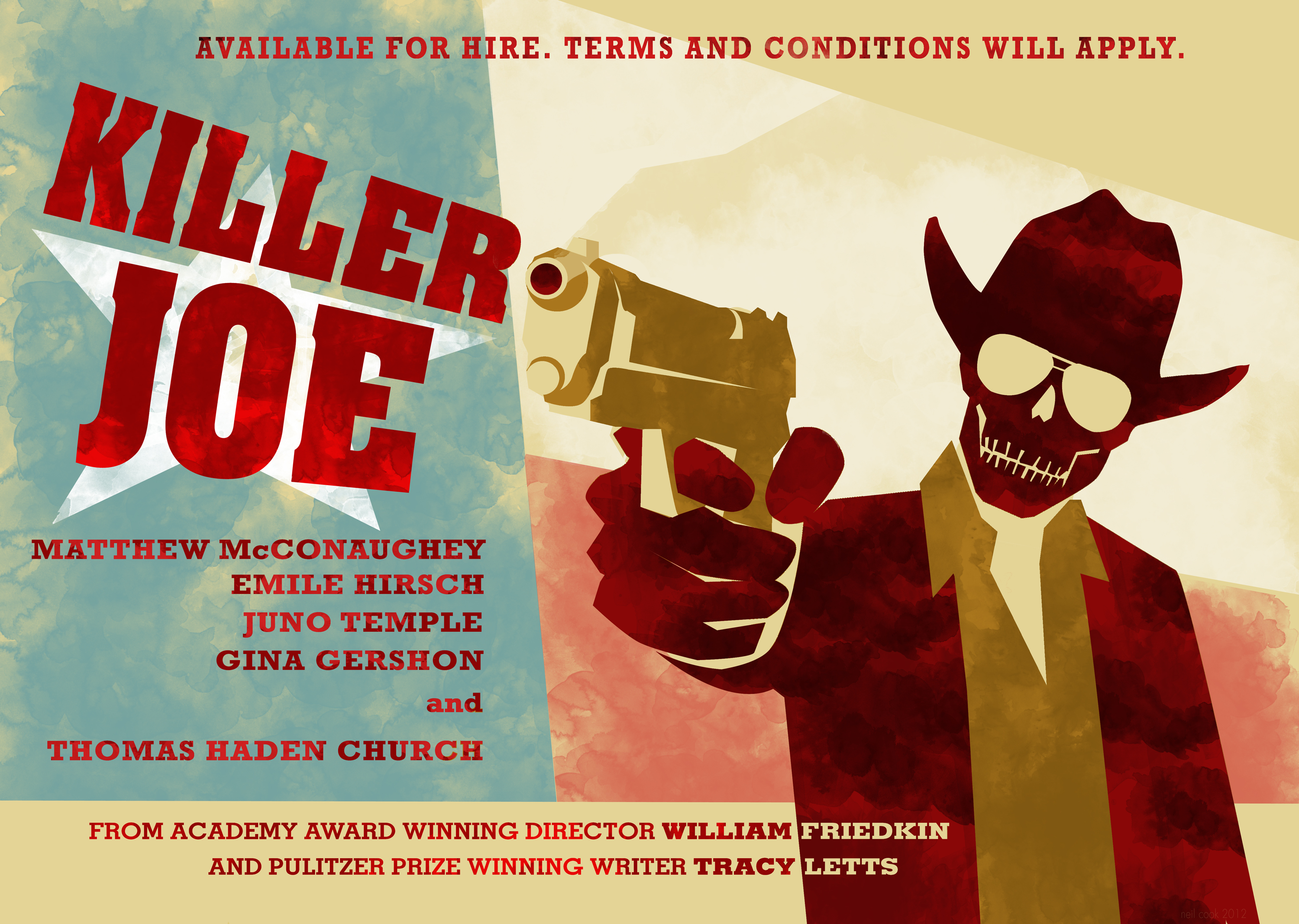
One of the most difficult things to learn as a critic of any kind is objectivity. Most critics fall victim to their own preconceived notions at some point in their careers. In many cases, it’s because the movie they watched isn’t the movie they expected to see. The most blatant example I’ve ever seen was from a reviewer who gave the low-budget indie adventure Project:Valkyrie a lousy rating because he, for whatever reason, expected giant fighting robots in the movie, instead of the lone man-sized one that was actually in the film. (Above image found at http://www.behance.net/gallery/Killer-Joe-typography-and-poster-concept/4037639)
In a perfect world, all critics would approach every piece of art with an open mind, judging it only against itself in terms of success or failure. But since critics are human beings, and our knowledge is based on past experiences, that approach will never happen, so we have to rely on intellectual filters to avoid bias. If, as a critic, one can attain self-awareness and avoid self-righteousness, then your reviews will reflect fact and opinion honestly.
Obviously, this isn’t just the failing of critics. Everyone dislikes at least one movie for not being what they expected. I’m just as guilty as anyone. I did not review Cronenberg’s History of Violence when it was released, not because it departed so radically from the graphic novel it adapted, but because it went in a third direction I didn’t anticipate. I wasn’t expecting David Cronenberg, of all artists, to take the storyline into familiar action movie territory. Because the movie didn’t live up to my ill-conceived expectations, I felt resentful towards it for some time. (Maybe I should be proud of myself for not expressing those feelings in print, instead of the more-reasonable reaction of being disgusted with myself for setting my own trap.)
Fortunately, I knew going into it that I was going to be biased, both pro and con, towards Killer Joe. First, I was already pre-disposed to liking it because of director William Friedkin’s first adaptation of a grim Tracy Letts’ play, Bug. Bug was my intro to Letts’ surreal Southern Gothic gallows humor and Killer Joe is the only of his plays I’ve seen performed live. It’s a violent, crass and grotesquely funny slice-of-horror involving a white trash family and a hired killer. People are violently assaulted and bloodily murdered on stage throughout the course of the film (effects in this case courtesy of A Far Cry From Homes Benzy). There’s also a better-than-fair amount of nudity in the play, made much more graphic by my position in the front row, about a foot or so from the stage. Plus, these were local actors who I knew for the most part and, considering the play opens with the lead actress bare from the waist-down, again, a little over a foot from my face, it’s hard not to get involved. The second act opens with the titular character, a corrupt Dallas police detective, completely nude, feet from my face, and during which time seemed to slow down to eternity (again, small theater).
in background, from left) John Gresh, Lissa Brennan, John Steffanauer 
and Hayley Nielsen, and (foreground) Patrick Jordan in 
barebones productions' Killer Joe. Photo by Ilya Goldin.]
  I was blown away by Letts’ script, shocked by the violence (I dodged a flying chicken leg during the climax), and astounded by several of the performances. In particular, I was struck by Haley Nielsen, who played the family’s possibly brain damaged pseudo-Lolita, Dottie. Dottie sleepwalks and sleeptalks, says odd things at inopportune times and appears almost psychic at others. She’s damaged and fragile and is the audience’s anchor to the story—even if you couldn’t care about the other characters, doomed and damned by their own bad decisions, you want to see that Dottie is safe in the end. Nielsen, a local actress I wasn’t familiar and thus wasn’t saddled with any of my personal baggage, performed Dottie with a far-away, almost ethereal quality, fully aware of what was happening, yet at the same time far-removed and emotionally stunted. Dottie is the key character in Killer Joe, all of the action revolves around her to some degree, and I think any performance of the play would hinge on the actress playing her. 
So, as a fan of the play, I was simulataneously excited and trepidatious about a film adaptation. Given Friedkin as a director, I figured the story was in good hands, particularly with Letts adapting his own script for screen. Because Billy F. never struck me as a guy who particularly gave a shit about mainstream success, I figured all the violence and sex would remain intact. My biggest fear, though, was not who would play Joe but Dottie. Friedkin could stick Adam Sandler in the title role and still pull off a good movie. But Dottie… no Hollywood actress even came to mind. 
Just like the play, Killer Joe begins with Chris (Emile Hirsch) banging on his father’s trailer door, begging to be let in. He is answered by his stepmother, Sharla (Gina Gershon)—she’s naked from the waist-down and her crotch is in his direct line-of-sight. This is how both Letts and Friedkin establish the sophistication of the crowd. “You answer the door like that?” Chris demands. 
To which Sharla replies, “Shut up—I didn’t know it was you!”
“Class” is not an issue with these people. So it comes as no surprise that Chris is in debt to drug dealers and wants to hire someone to kill his birth mother for $50K worth of insurance money. It’s less of a surprise when his wet-brain father, Ansel (Thomas Hayden Church), less than a generation older than his son, puts up little argument against the plan. Somebody told Chris “about a guy” who does murder-for-hire, Dallas cop Joe Campbell (Matthew McConaughey), aka “Killer Joe”, and Chris figures that the guy might be charitable enough to do the job on spec and take a cut of the insurance money after. But Joe isn’t the kind of guy to give away murder services and demands twenty-five grand up front, non-negotiable. The story might have ended there, with the Smith family returning to their no-class hovel, if it weren’t for Dottie (Juno Temple). As a baby, Dottie’s mother tried to suffocate her with a pillow because “she was young and didn’t want to give up her life.” It didn’t work, obviously—Dottie just “wasn’t” for a short while—and returned to the land of the living as a constant disappointment. When Joe asks Dottie how she knows this happened, being an infant and all, Dottie replies, “I remember it.”
Dottie is part of the family without serving any specific function. Ansel treats her like a little girl; to Chris, she’s the only shred of anything good; to Sharla, she’s just around, to make dinner or run errands. Emotionally, Dottie is twelve and no one does anything to help her mature. The only giveaway that she’s older is her body and her unconsciously-hyper sexuality, which disturbs Chris’ dreams and enchants Joe. Joe agrees to do the job as long as Dottie is his “retainer”.
Joe and Dottie’s “first date” starts off uncomfortable enough. She rebels at wearing a cocktail dress and is sobbing when Joe arrives. He speaks kindly to her, but matter-of-factly, without condescension, without walking on egg shells around her. Midway through their meal, he puts an end to her incessant absent-minded and skittish babbling by having her stand up, remove her clothes and put on the dress for him. As in the play, this is an electrically creepy moment but for completely different reasons. On stage, Nielsen stripped in front of Joe and, thus, in front of the entire audience, rendering herself completely vulnerable and not just to him, but to the audience. It’s meant to draw forth instinctual protectiveness from everyone watching, accentuating that Joe is a predator. But in the film, Friedkin stages the action in a single shot where Joe stands with his back to Dottie as she changes. The camera doesn’t focus on her nudity but it doesn’t shy from it either. What we focus on, then, is a similar transition in Joe’s character, but one with far more menace. Never once does he face her, and barely looks at her even when he moves her in front of him, and instead keeps his eyes on some faraway spot on the ceiling. “How old are you right now?” he asks. 
“Twelve.”
“So am I.”
By now if you’re expecting any kind of happy ending, I wish I could live a day inside your mind. 
The underlying violence begins to ripple forth at this point, as Joe installs himself in the family’s trailer and their life. Chris’s sense of morality keeps butting up with his instinct for survival and he continually flip-flops over the plan—kill her, Joe; don’t kill her, Joe—and then he focusses purely on rescuing Dottie, who at this point may not even need to be rescued. But since Chris hasn’t made a single winning move since the film started, the outcome, to quote the Magic 8 Ball, “is doubtful”. 
Friedkin plays Letts for all its worth, squeezing every drop of amorality and depravity onto the screen. Even if you know all the beats of the story, the violent beats are still shocks of cold water. And everyone in the film holds their own. Matthew McConaughy is a stand-out as the cold-blooded Joe, who is sweapt out to sea by the dotty Dottie. There is a moment, after Sharla has been beaten and humiliated, where the camera stays in tight close-up on Gina Gershon’s face and you know she’s never been better. Emile Hirsch as Chris and Thomas Hayden Church as Ansel keep our sympathies in the air like a heated game of volleyball. None of the Smiths are remotely bright; their desperation drives their mundane existences and there’s no real loyalty lost between them. It’s almost too easy for a reptile like Joe to slide in and dominate them all, especially when they think they can use chest-beating to gain the upper hand. 
So it all comes down to Juno Temple as Dottie. Not an illogical choice, given her impressive performance in Atonement. (Hey, it got her into four collective minutes of The Dark Knight Rises.) In Killer Joe, she is uninhibited and unashamed, her vulnerability is communicated by her big doe eyes and post-pubescent movements. And it’s here that my objective dissonance took hold. It’s entirely unfair to compare Temple’s performance to an actress in a regional production of the play, but Hayley Nielsen was my introduction to the story and her performance defined the character to me. As Dottie, Nielsen was ephemeral and on another plane of existence than the rest of the characters. Most of her lines were delivered in a breathless and excited monotone, every line a declaration and, thus, a non-sequiter. For me—and only for me, obviously—Temple was too grounded in her portrayal of Dottie. Within tight close-ups her Dottie was never farther from me than Nielsen, spacially-speaking, and her fragile, damaged persona is in perfect service of the story and script. But she had a physical presence that Nielsen intentionally abandoned, and it drags the rest of the story, and all of its horror and grit and despair, down into the gutter where it began. Temple Dottie struck me as too real. The rest of the family you could meet at any Wal-Mart in the country. A physical realization of Dottie, even though she is a “pure” character, brings these low-lifes into too-sharp of a relief. 
But a real Dottie allows for a more believable Killer Joe. I have no real proof in my suspicion, but I think it would be an easy temptation for actors to play Joe as a bad-ass, smooth and over-the-top thug who is only in control because he’s slightly smarter than those around him. Everyone in the story is in danger of characature, just a few millimeters off in either direction will result in something balloony and lumpy from a Ralph Bakshi movie. But McConnaughy plays Joe as a well-oiled psychopathic watch, a mass of coiled springs contained by the exterior. His interaction with Dottie brings out a different man, a man used to control but unused to an unpredictable factor like Dottie. Though he does manage to possess her, there’s something of her at work on him beyond her childish sexuality. She mentions “pure love” several times throughout the film, and what Joe feels for her is obviously far from pure, but maybe to his mind it is. His interest in her may be a result of something human unlocked inside of him. As with Dottie’s nudity, Joe’s interaction with her allows for something vulnerable to shine out. It isn’t redemption, but it isn’t the revulsion you’re meant to feel during a live performance. 
It could be quibbling, but this leads to one point of genuine disappointment in the film. In the play, Joe’s dominance and subjugation of the family is presented at the beginning of the second act. Having been brutally beaten by the drug dealers, Chris collapses through the trailer’s front door. Instead of Sharla, he encounters a completely naked and gun-weilding Joe. Thinking Chris might be a burglar, Joe has lept out Dottie’s bed and onto Chris as the complete alpha male. On stage, it’s shocking, naturally, and awkwardly funny and uncomfortable, but it establishes Joe’s new position in the dynamic. Like Beowulf, he’ll face his greatest challenges with only a weapon and the skin he was born in. 
In the film, Friedkin declines to show McConaughey in his full-frontal glory. It’s obvious that he’s completely nude, but the reveal isn’t as strong. We stay on a neutral point of view as Chris crashes through the door and Joe is already waiting for him on the other side. Visually, it removes a great deal of dynamism from both the scene and Joe’s character. In the film, instead of a Grecian athlete or an unbridled predator, he’s simply a naked guy with a gun. An argument can be made for many things—that it cheapens Temple’s and Gershon’s nudity, that it was staged thusly to avoid further problems with censors (even though Friedkin allowed the film to go to theaters unrated, which waters down this latter argument). All it does is diminishes the ferocity of the scene. I’ve thought it over and come to the conclusion that this is a thematic mistake. My issues with Juno Temple’s performance are my own hang-up. 
With all the other fearless choices made with the material it’s disappointing that Friedkin and/or McConaughey--to quote an actor I’ve worked with who is accustomed to nude scenes--“pussied out on the dick shot”. 
Ultimately, a play isn’t a movie and a movie isn’t a play and critics should remember that before they waste time writing a review. Report on the art you saw, not the art you expected. And definitely don’t watch Killer Joe without a designated moral compass.
[Special blame goes to Eric Thornett (writer/director of A Sweet and Vicious Beauty) for originally dragging us to the play in 2009.

Wednesday, August 10, 2011

BURKE AND HARE (2010)


Up the close and down the stair,
In the house with Burke and Hare.
Burke’s the butcher, Hare’s the thief,
Knox, the boy who buys the beef.

Burke and Hare,
Fell down the stair,
With a body in a box,
Going to Dr. Knox.
 —19th-century Edinburgh jumping-rope rhyme

Between November 1827 to 31 October 1828, a pair of Irish immigrants named William Burke and William Hare, murdered seventeen people and sold their bodies to Doctor Robert Knox. An anatomy instructor to students of Edinburgh Medical College, Knox needed cadavers for his “hands-on” lectures, but was hobbled by a silly little law that limited the supply of medical cadavers to that of executed criminals. Tragically, Scotland was experiencing a severe reduction in executions due to the scaling back of “The Bloody Code” (aka The Death Penalty) in favor of transporting criminals to Australia. As a result, less than six corpses were available to the growing rate of medical students. This gave rise to the carreer of “resurrectionist” (grave robbers, body snatchers) and, very quickly, “anatomy murder”. Which brings us back around to our heroes, Williams Burke and Hare.

With the assistance of Hare’s wife Margaret “Lucky” Laird and Burke’s lady-friend, “actress” Helen McDougal, the Williams became quite skilled in keeping Dr. Knox’s lectures going. They even developed a method of murder wherein they would sit on their drunk or drugged victims and crush their chests, while also smothering them. It was quick and clean, did no damage to the body beyond, you know, death. It came to be called “burking” (a term still used in the United Kingdom today, though it’s applied more to the peaceful or quiet suppression of dissent).

Because neither of the Williams or their ladyfriends could keep their bloody mouths shut, particularly when they were drunk—which, being Irish, was most of the time—they were eventually caught after a certain night when Burke “casually”—as casually as one known for a “ferocious and malignant disposition” [Newry Telegraph, 31 March 1829—Correspondence from the Northern Whig] can be—asked about the health of every single family member of a local business owner. Oh, and when most of Knox’s students recognized the fresh body of a local boy nicknamed “Daft Johnny”. (Knox dismissed this as nonsense and hurriedly removed the face, hands and feet of the corpse.)

Soon, the perpetrators of the “Westport Murders” were arrested (on admittedly thin evidence, according to the local constabulary). The ladies were acquitted due to lack of evidence; Hare struck a deal and pinned then entire mess on Burke, who was then hanged on January 28, 1829. Dr. Knox was never implicated in the affair but lost his standing at Edinburgh and by 1842 had taken a position at the London Free Cancer Hospital. He died quietly in 1862, was buried and was not resurrected. As a direct result of the actions of these villains, The Anatomy Act 1832 passed, increasing the methods of legal means for acquiring medical corpses and putting a kibosh on the incentive for grave robbing and anatomy murder. Little is known of Hare’s post-burking career, but the remains of both Williams ended up at the Edinburgh College, where they can be seen today.

In 1884, the pair were immortalized in Robert Louis Stevenson’s story The Body Snatcher", which was made into a film starring Boris Karloff and produced by Val Lewton n 1945. In 1953, Dylan Thomas wrote a play inspired by them called The Doctor and the Devils, which was made into a 1985 film directed by Freddie Francis, who had previously directed an adaptation of the story, The Flesh and the Fiends, in 1960 starring Peter Cushing as Dr. Knox. The pair has shown up in one form or another in episodes of Alfred Hitchcock Presents and Dr. Who, countless short stories, novels and, as seen at the beginning of this piece, children’s jump-rope chants. Which just goes to show that body snatching takes many, many forms.

Burke and Hare, the latest telling of the exploits of this wacky duo showed up in the U.K., starring your favorite and mine, Simon Pegg as Burke, Andy Serkis as “Hare” (and not a motion-captured creature for a change), Tom Wilkinson as Knox and Tim Curry as Knox’s nemesis, Dr. Monro (who loves nothing more than to carry around new pairs of “display feet” to show to the upper crust). Directing this bloody, nasty, dark and brutal tale is none-other than John Landis. The film also features cameos by Jenny Augutter, Ronnie Corbett, Bill Bailey and a surprise visit from Sir Christopher Lee. Actually, this go-around isn’t dark, or nasty or very brutal. In fact, Landis has described it as a romantic comedy and the titular characters are really the heroes of this film! …Kinda. Depending on your definition of “hero”, I suppose. At the very least, they’re the most loveable serial murderers you’ve seen in a long time.

The lovable, hapless rogues are at the end of their rope (although not yet, literally), failing at numerous con-schemes and snake oil sales, and just when it seems all is lost, they hear about the plight of the anatomy professor. Seeing a hole in the supply end of this particular economics, they ponder the potential when Hare’s wife, Lucky (Jessica Hynes), declares that one of their upstairs tenants has passed on. And needs gotten-rid-of. Stuffing the poor gent into a barrel, the pair roll the fresh body (albeit, one snapped in half in order to fit into said barrel) over to Knox’s castle. Upon inspection, the corpse-poor anatomist offers them a large sum of money to bring him two bodies per week, no questions asked.

Elated at the prospect but unsure how to go about achieving their weekly goal, the Williams stop off for a pint and it’s there that Willie Burke meets and falls in love with Helen McDougal (Isla Fisher). The former prostitute is currently pursuing a career in acting, hoping to some day produce an all-female version of MacBeth. If only she could find a financier...

Returning home, joy-upon-joys, a drunken Lucky declares that their last tenant is so close to death he just needs to be reminded to shove-off. And that’s when the duo sits down (upon dying Joseph) and invent “burking”. Out of tenants but not ideas, our heroes set out to ply their new trade to greater or lesser success. Soon the money is rolling in. Hare begins saving up for his own funeral parlor, while Burke fancies himself as Helen’s future backer (and fronter, if he plays his cards right and you get my meaning).


Landis’ Burke and Hare follows the timeline and methods, more or less, of the real duo’s history, but plays around with the rest of the details for additional fun. For instance, while it’s true that Charles Darwin was a student of Dr. Monro’s for a time, rather than assisting in acquiring legal corpses for the obsequious surgeon, he was so disgusted by the man’s attitudes toward dissection—including showing up for business meetings still covered in the red of his trade—that it turned Darwin off medicine entirely, switching his attention to Naturalism and Natural History. (So you creationists out there should focus a little more of your bitterness onto Monro.) There is no evidence to support the film’s depiction of Monro’s literal foot fetish, and even less evidence to support that Hare did anything with his life following his betrayal of Burke, let alone establish a thriving funeral parlor. And the idea that Willie Burke was just a sweet, lonely lad with flexible scruples may well be the biggest fabrication of them all. But none of that should bother you unless you’re one of those anal compulsive experts on resurrectionists. And if you are, you undoubtedly have much bigger things to worry about.

Much has been made about Burke and Hare being John Landis’ first feature film in over ten years, but while that’s true, it isn’t like the famed director has been treading water all these years, what with his work on documentaries, episodes of The Masters of Horror, etc., so don’t call this a “comeback”. At least not to his face. Burke and Hare is a far cry from the chaos of The Blues Brothers and An American Werewolf in London. Instead, it has the restrained absurdity and dignified slapstick of the classic Ealing Studios like The Lavender Hill Mob

In fact, Ealing has had a bit of a resurgence in the last decade, thanks to the remake of the mysteriously-popular “St. Trinian’s Girls” movies. For further connection, “St. Trinian's writers Piers Ashworth and Nick Moorcroft penned the B&H screenplay, Pegg’s (and Wright’s) landmark Shaun of the Dead and Neal Marshall’s The Descent were shot on the Ealing lots. By Landis’ own admission, “This is very much my attempt to make an Ealing comedy, in the very black tradition of Kind Hearts and Coronets and The Ladykillers, where the whole cast murders one another.” (“Burke and Hare behind the scenes”, The Telegraph, Horatia Harrod 04 Oct 2010) According to Serkis (in the same article), Landis wanted the Burke and Hare dynamic to be “like an evil Laurel and Hardy”, and since the actors are getting along so well, we, as an audience, can forgive the nasty murder and corpse-abuse.

One final bit of geekery before we move on: most of the gory body parts were supplied by none-other than friend-of-Landis-and-horror-fans-all, Greg Nicotero. “You gotta pull favours in this industry, there’s no money”, said Pegg (same piece).

Like the majority of the Ealing Studios’ films, Burke and Hare is amusing but not hilarious, romantic but not saccharine, and has a slower pace than our modern deficient attention spans are used to without being boring. Sometimes the European and American sensibilities clash—we’re much more appreciative of the emptying of bed pans onto characters, moreso when the gag is repeated. We also appreciate it when our anti-heroes drop the “anti” in the third act, so that instead of one William betraying the other, the latter makes a noble sacrifice for the former. Whether or not we Yankees get the cameo by William Wordsworth or the numerous anachronisms is really beside the point. So, too, is the film’s message “who’s more evil, the killers or the doctors?” It’s not like those things will stifle enjoyment.

What will stifle enjoyment, or even the opportunity to decide, is the fact that Burke and Hare has come and gone in the United Kingdom, available on PAL DVD and Blu-Ray, the closest we here in the states can come to the film is to stream it on Amazon On-Demand. No formal DVD release date has been announced, let alone a theatrical screening. We, as a nation should protest. May I recommend petitioning the holders of the U.S. rights, IFC Films? We should all send them a fresh corpse to make our point.

Monday, March 8, 2010

MUMSY, NANNY, SONNY AND GIRLY (1969)

In its Wikipedia entry, Mumsy, Nanny, Sonny and Girly is described as “arguably one of the great lost films of British horror cinema”. I’m here to join that argument, but on the contrary view. Based on a play by Maisie Mosco and directed by the esteemed Freddie Francis and starring the appealing Vanessa Howard as “Girly” (as the movie was known here), MNS&G tells the rather empty story about the breakdown of the British Family as portrayed by its titular members. Mumsy and Nanny look after Sonny and Girly, who are adults but still dress as school children. They all play “The Game” in which they assume their roles and all they entail. But the “children” seek out “friends” to play with, usually resulting in kidnapping and murder (or, as it’s called under the rules of The Game, “sent to the angels”). “New Friends” are often found in the form of hobos and hippies, but during one outing, Girly and Sonny discover a drunken male prostitute and his client. They murder the client and trick the gigolo into believing that he was responsible for her death, caused by an alcohol-fueled accident. Thus, he joins The Game as “New Friend”. But once he catches on to the rules of the Game, he roots around and uncovers existing tension between the quartet. After a previous “New Friend” is sent to the angels before his eyes, he starts to manipulate the family to serve his own ends. Not surprisingly, he is able to turn one family member against the other. Maybe soon, he can devise a way to become Daddy and make Girly his Mumsy.

Upon its initial release, Girly was relatively well-received by critics who found the film to be a droll satire on the crumbling moral values of stodgy old Britain in the wake of the era of Free Love. Viewers, however, were apparently too busy indulging in that so-called Free Love to be bothered with the cinema and the movie faded quickly from the marquees. In the U.S., Girly was met with disinterest by audiences and studios alike. During the “let’s get everything on video!!” boom, Girly saw an equally short release on VHS, then vanished into obscurity, relegated to slug lines in Video Search of Miami catalogs and bootleg Usenet groups. Reportedly, copies of the film were so scarce that the organizers of a 2004 Freddie Francis Film Festival (try saying that three times fast) were unable to locate a print. But nobody loves a scarce or “lost” film more than a film fanatic, and there are legions of those, so Girly was rediscovered in the intervening years. To the delight of dozens at least.

The problem with Girly lies in the fact that it isn’t very interesting. Take away the allure of Howard in her schoolgirl garb and you’re left with a lot of doddering scenes of Mumsy knitting and Nanny doting, Sonny taking pictures and Girly scampering. New Friend is hard to root for because he’s so damned sleazy, and his scene “corrupting” Girly is terribly uncomfortable because she only briefly drops her little girl guise—at the point of orgasm. So the satire is lost to an extreme “ick” factor, particularly because it’s never made clear whether Sonny and Girly are playing the game or if they’re emotionally stuck in prepubescence. So does her “coming of age” scene come under the heading of statutory rape, at least from a psychological standpoint, or are we not supposed to look that deep into it? And if the absence of a hero is the point, then shouldn’t at least one of the characters be remotely interesting?

Another problem is the length of time that has elapsed between release and rediscovery. All of this adult-as-little-kid nonsense might have been delightfully perverse in the ‘60s, but in light of horror movies like The Baby and American Gothic, among many others in the intervening years, the premise has fallen to a cliché that is almost impossible to ignore in favor of context. Combine all of this—sluggish pace, outdated relationships, uninteresting characters in an unsympathetic situation—with the washed-out and grainy existing prints, and Girly just doesn’t feel worth the time it took to hunt it down.

So does this Freddie Francis curiosity, Mumsy, Nanny, Sonny and Girly, deserve to be a “forgotten film”? No more than any other forgotten film, it could be argued. But is it one of the “great lost films”? I, for one, say no. Girly doesn’t seem lost so much as, like an adult pretending to be an unpleasant child, abandoned. Only this time, the parents are represented by any interested audience. 

(For added fun, dig around for the novel by Brian Comport! It's out of print and everything. Note, a DVD was just released this month... joy... rapture...)

Sunday, March 7, 2010

PRETTY MAIDS ALL IN A ROW (1971)


It’s always a good idea to view a movie in the context of the times during which it was made. Historical perspective helps you to appreciate, say, the narrative and creative editing employed in D.W. Griffith’s Birth of a Nation (aka The Clansman) without condoning the central conceit that the Ku Klux Klan are the heroes of the piece. Understanding that there had been nothing like Citizen Kane seen in theaters before Welles popped it up there might help you stop yourself from declaring it “boring” in public, which will rescue you from getting your skull caved in by film scholars. Often, movies set in their contemporary times often serve as snapshots of history in terms of culture, fashion, politics and attitude. To that end, Pretty Maids All in a Row is a preservation of a singular moment in time—a specific ten minutes during the height of the sexual revolution, possibly just moments before the criminalization of “statutory rape”. 

The early ‘70s were a dynamite time to attend Oceanfront High School. There isn’t a single chick in your biology class that isn’t a stone fox and the female students seem to outnumber the males by about thirty to one. And hell, those boys are all football jocks—even Ponce De Leon Harper, the team’s “student manager”, is a decent-looking chap and pretty cool for a virgin. But that latter part is a drag, man. Being seventeen and never even touching a girl? What a bring-down. Fortunately for Ponce, Vice Principal and Guidance Counselor “Tiger” McDrew (Rock Hudson) has taken him under his wing. He wants to see the lad follow in his footsteps—go off to college, come back to the school to teach and coach, and be a master with the ladies. He even cooks up a scheme to help Ponce score with the new substitute teacher, Miss Smith (Angie Dickenson), who wears even less than the female students causing Ponce to walk funny every minute of the day. But there’s a real bummer harshing everyone’s vibe—seems there’s a serial killer on the loose at the school. Girls are turning up murdered, with notes pinned to their panties referring to them as “Honey”. I mean, like, who calls someone “Honey” any more?

Now the state fuzz is all over the school, Captain Sarcher (Telly Savalas) and his partner Follo (James Doohan) are questioning everyone. And that’s cutting into Tiger’s time with all his pupils. I mean, he has a lot on his plate. The “Testing” sign above his locked office door is always on, ya dig? And the big game is on Friday! You don’t think these murders are gonna interfere, do you? No way, man.

Okay, I’ve had my fun. Pretty Maids All In A Row has one of the strangest pedigrees of any movie in my recent memory. A black comedy based on a less-than-popular novel by Francis Pollini, adapted for the screen by Gene Roddenberry of all people, directed by Roger Vadim (in a funk over his recent divorce from Jane Fonda—who certainly didn’t take kindly to his casting her brother, Peter, as her love interest in Spirits of the Dead, not that that was the direct cause of the split), co-starring Keenan Wynn and Roddy McDowell and “introducing” John David Carson, whose biggest claim to fame is that he was the runner up to play “David” on The Partridge Family. Other folks popping up include Roddenberry’s Star Trek pal Doohan as Savalas’ partner, and JoAnna Cameron (TV’s Isis).

The movie’s tone is all over the place and Vadim downplays the mystery aspect of the movie to concentrate on the sex romp. Shooting in his usual bland “soap commercial” style, Vadim frames everyone on a lateral plane and lets the dumb story play out. Fetishizing all the girls, amplifying the fact that young women were coming into their own sexually at the tail end of the ‘60s, high on women’s equality and the sexual revolution, there isn’t a single female character portrayed as anything more than an object of desire. Micro-mini skirts, skin-tight pants, high booted and bra-less, these “Pretty Maids” are that and nothing more. Even Dickenson is a characture babe, though her romance with Ponce is handled with more dignity and grace than any of the proceedings. For the most part, the movie is preoccupied with all of Tiger’s trysts with the female students. Let’s forget for a moment that he’s married and has a daughter, and let’s even forget that each of his partners is under seventeen, when does he find the time to teach and coach and do all the things he’s seen in the movie that make him so groovy to the students? He’s always in his office with one naked girl after another, his “testing” light on and door locked—in fact, “Lock the door” is his casual way of signaling that he wants to “make it” with whoever enters his room. Like every male fantasy played out in Penthouse Forum, every girl is ready and willing just for him. “My generation is more liberated,” explains Rita—played by “Joy Bang”. “We’re more in touch with our emotions.”

Swell. The fact that all of the murdered girls were sexually assaulted before being strangled never seems very important to any of the police—not to bumbling Keenan Wynn (constantly reduced to directing traffic by the irritated Savalas), not even to the hard-boiled Sarcher. In fact, the murders themselves seem to be little more than an inconvenience. After all, the best that anyone can say about the first victim is that she was a “great little cheerleader” (and only Ponce takes offense to that and only once). The funerals are all held at the same time, as a run-up to the big game (“We never practise on the day of a murder,” Ponce says to one of the players) and the only wet-eyes belong to Tiger—one student is idly blowing bubbles during the eulogy—and that seems to be because he lost a few great pieces of ass. Even when the murderer is unveiled, to no one’s surprise, it seems secondary to the fact that Ponce finally made it with Miss Smith and is on his way to becoming a ladies man like ol’ Tiger.

Despite a heavy campaign by MGM, which included a multi-page spread in Playboy, Pretty Maids All in a Row bombed when it was released, but not for the reasons you’d think. It appears that today’s society is far more outraged by teenage sexuality than that of the ‘70s. The main criticisms seemed to be leveled at Vadim’s uninspired direction and the bland performance by Carson (despite his early turgid turmoil depicted as intentionally hilarious). ‘70s audiences had no trouble with bubble-headed sex kitten Dickenson or swinger Hudson in his polyester pants and porno mustache. As Rita says, that generation was more liberated and not as hung up on those sorts of things. And at the time, Hudson, as Tiger, was the guy all the women wanted and all the guys wanted to be. Forty years ago he wasn’t a skeezy scumbag with a thing for little girls. That Dickenson has only a momentary lapse of conscience before bedding Ponce is secondary—she even explains that she wants it as much as he does. Their scenes together, however, do smack of amusing subversion. Their animalistic mating sequences were surely meant to parody Hudson’s squeaky clean pairings with Doris Day. (Though the mental image of Hudson mauling Day has to be upsetting to even the hardest cynic.)

So while this is all now embaressing at best and offensive at worst, to watch Pretty Maids with a level head, you have to ground yourself firmly in the times during which it was made. The casual approach to the murders is high black comedy; the swinging the pinnacle of hip. If you modern-day viewers can choke down your puritanical instincts in these days of post-Janet-Jackson-wardrobe-malfunction (and keep his lunch down during those sex scenes with Hudson), you will discover a biting, sardonic script at work. Much has been made of Daniel Waters taking inspiration for Heathers from Massacre at Central High, but it isn’t too hard to see Pretty Maids’ fingerprints on that seminal ‘80s movie.

But as far as the mechanics of the film, Vadim apologists have described his style as acutely “European”, so reducing females to the basics of their anatomy is less fetishism as it is liberal and modern (he even poses a naked Dickenson in a way to homage ex-wife Brigitte Bardot in his own And God Created Women…), but one man’s liberated is another man’s uninspired. Other “European” touches seem to be a disinterested approach to background sound and room tone—all of which seem to utterly disappear when the ADR’d dialogue pops up.

But there is also a good deal of delicious irony to be mined by modern viewing. Make all the jokes you want about Hudson’s real-life sexuality, Savalas smoking (though lighting the matches with his thumb is damned cool). Pause now, too, to make as many Star Trek jokes as you want; be sure to include references to Uhura’s and Nurse Chapel’s own micro-skirts (same costumer, after all). And let’s not forget to mention that this sex-and-murder hilarity fest was scored by uber-straight Mormon family, The Osmonds.

Ultimately, your enjoyment of Pretty Maids All in a Row will rely on your own sensibilities at the time of watching. If you’re squirming during the opening sequence of under-age ass-shots, you might be better off switching to something else. It’s likely that all the teen sexuality is what’s kept this movie from getting a legitimate DVD release—or even a cable restoration as the TCM print I watched was pretty worn, dirty and suffered from severe chemical “breathing” in the third reel. But then, I guess, if you feel guilty for getting turned on or off or whatever, someone is just going to accuse you something or other, so you’re damned no matter what you do. As for me, feeling dirty is always preferable to piety. Like Billy Joel sang, “Sinners are much more fun.”

Tuesday, March 2, 2010

FAST-WALKING (1982)

Few actors do “anti-hero” as well as James Woods. Even his sleaziest, most-dangerous characters seem like guys you wouldn’t mind hanging out with for a little while (obviously, I’m making an exception for movies like The Onion Field and Salvador). You might not even care if they screwed you over at the end of the conversation. Anyway, you certainly wouldn’t be surprised. In the ‘80s, Woods perfected the “amiable, ethically-challenged chump way in over his head” performance and even managed to sneak in a few good-guy roles in terrific movies like Joshua Then and Now and The Hard Way. His biggest splashes may have come from Once Upon a Time in America and (possibly) Videodrome, but Fast-Walking is an interesting, amusingly-grimy gem from the early ‘80s that hinges on you liking Woods, no matter how yucky his actions might get. And he pulls it off beautifully.

Frank “Fast-Walking” Miniver is your classic underachiever. Dreaming of moving to Oregon to open a ranch of one kind or another, something his pot-fueled mind and motor-mouth turns to regularly, he splits his free time between running Mexican johns to a local brothel cousin’s wife runs out of a local general store, and his job as a prison guard, where he spends most of his time hanging out with his trustee cousin Wasco and ridiculing his authoritative superiors behind their backs. The inmates kind of like him because he’s so laid back he’s actually a lazy guard, despite his reputation as a sharp-shooter. And he isn’t a raving racist like the majority of his fellows, which works in his favor as there seems to be a race riot brewing within the prison, which is escalated by the arrival of a black activist named Galliot.

While “Fast-Walking” focuses his energy on getting into the pants of Wasco’s girlfriend, Moke, Wasco’s desire to control all business within the prison—from drugs to financial investments—leads him to making a deal with the hacks to arrange for Galliot’s murder. “Fast-Walking” is deemed the best candidate to pull this off because of his skills with a rifle. On the other side of this, he’s similarly recruited by friends of Galliot’s to help the man escape from prison. Soon, Frank has a scheme brewing to play both sides against the middle.

Sleazy, gritty, foul-mouthed, occasionally violent and filled to the brim with reprehensible characters—there isn’t a straight-and-narrow fellow to be found—Fast-Walking should be too scuzzy to endure. But the charm of the movie relies completely on the viewer sympathizing with Wood’s main character and oddly enough it all works. At heart, Frank is just trying to get by in life with the least amount of effort and is easy to empathize with him. He’s lazy; he thinks he’s a master of all things, from dancing to sex; and he’s a lot dumber than he thinks he is. His greatest strength is in talking his way out of trouble. When his superiors nail him for one infraction or another, he flashes his “give a shit” grin and escapes, but just barely. You wouldn’t want your sister to marry him, but Frank might be fun to have around.

The movie’s oddly light-hearted tone off-sets all the grotesque criminality, which also works to its favor. As Wasco, Tim McIntyre delivers a number of philosophical soliloquies regarding his skewed approach to life on the inside, which makes him interesting even when he’s doing such dastardly deeds and stomping on Timothy Carey or arranging for another inmate to be hurled from an upper floor. As for Frank, he’s so out-for-himself that even when he does the right thing, you’re caught off-guard by how he does it.

I have not yet had the opportunity to read Ernest Brawley’s novel, The Rap, on which this movie is based, though I’m told that it differs greatly from the production. The main differences seem to lie in the character of Wasco (in the book he apparently lacks in charm but makes up for that in ferocity) and the fact that “Fast-Walking” is not the main character. Aside from that, I believe that there’s also very little similar. But I’ll have to get back to you on that.

So unless you’re completely turned off by the thought of seeing M. Emmett Walsh fully-frontally nude (and Kay Lenz’s nudity should restore your eyesight), there’s really nothing to excuse you from hunting this one down. Oh, well, except for the fact that it’s impossible to run down. VHS copies can be found but it never received an official DVD release, and that’s a real shame. What—does Stephen King own the patent on “feel good” prison movies? Hey, Hollywood! Release Fast-Walking. What the hell’s the matter with you?

Saturday, February 20, 2010

THE ODD JOB (1978)


Arguably, most Americans, particularly of and around my generation, think of Great Britain as defined by either Guy Ritchie, with people running for tube trains in alternately sped-up and slow motion, or as illustrated by Monty Python’s Flying Circus
. Certainly anyone who grew up watching the bizarre and silly (and unedited) reruns on PBS held on to a stubborn belief that all Englishmen were either stiff or insane and that all English Women were men in drag (or Carol Cleveland). How dull would Renaissance Fairs be without hearing quotes from Monty Python and the Holy Grail shouted seemingly at random from all corners of the fairground? How dull would Broadway be without these sketches regurgitated onto the stage courtesy of Spamalot? How empty would our lives be without the omnipresent John Cleese of the late ‘80s (and how much less despairing would we be without the sad John Cleese of today? Of course, the same can be asked about Steve Martin…)?

Without Monty Python’s success both abroad and here in the Colonies, would we have had the fantastic and whimsical disasters of Terry Gilliam? Where would teenage girls look for fantasy romance in the pre-Twilight years had Terry Jones never teamed with Jim Henson and George Lucas for Labyrinth? And what about those other guys? Idle and Palin and… the third one… the dead one…gay guy, what’sisname? Graham Chapman. Yeah, him?

Hopefully, if you’ve gotten this far without hurling your laptop across the room (or saying “Who? What?”—in which case, go back to Mafia Wars, kid), you’ve realized that I’m trying to be satirical here. While Monty Python’s Flying Circus has passed in and out of the realm of “cool” more times than The Simpsons, depending how drunk you are at the time of the inevitable quoting of the “Dead Parrot Sketch”, the landmark show was indeed a hallmark in our more-or-less recent culture. Certainly in the adolescences of those of us who considered ourselves to be iconoclasts as teens and young adults. Often raunchy, usually satirical and often baffling (not just because it flew over the heads of those with a less-than-passable knowledge of British society but also because it was sometimes simply nonsensical), the Flying Circus was at first a delightful treat and later a rite-of-passage. But to those of us who find ourselves “past” or “over” the daffy humor because it’s somehow out of fashion now, I’ve got news for you: you’re not the first ones to feel this way. The “Pythons” got there way before we did.

Cleese in particular felt pigeon-holed by the demands of television comedy and sought greener pastures during the show’s final 1974 season. After it left the airwaves, the entire troupe scattered for solo and duo efforts but inevitably returned and regrouped for live concerts and the subsequent movies. As with any group of co-workers, the friendships ebbed and waned before reknitting. Python-ologists are well-versed in the tragedies and triumphs of some of these non-Python efforts (Gilliam’s Time Bandits and Brazil woes; Palin’s struggles on Ripping Yarns; Cleese’s marital calamities occurring amidst shooting Fawlty Towers), but Chapman, who died in 1989, is often overlooked during these introspective retrospectives.

Closeted for most of his life and a severe alcoholic, Chapman often portrayed the stiffest of the upper-crust Brits—judges, generals, ministers, etc.—and was called one of the most “instinctually funny” members of the group by his frequent co-writer Cleese, but “never the engine” of the comedy. Most of Chapman’s contributions were delivered off the cuff, to make sketches “madder”. But of the group, he may have been the best actor, as evidenced in both Holy Grail and, perhaps the best movie in their repertoire, Life of Brian. Chapman struggled for years to get his pirate adventure/comedy Yellowbeard to the screen only to see it crash and burn at the box office. But long before that, he popped up in off-beat projects that seemed to suit him but never quite worked. One of the best-known but least-seen of these is the 1978 black comedy The Odd Job.

Like an extended Python sketch (and, indeed, it was originally filmed as an episode of Ronnie Barker’s television show, 6 Dates with Ronnie), The Odd Job has a simple premise milked for every drop of laughter and mayhem it can manage. Poor upright Arthur Harris has a row with his wife, Fiona, and she leaves him. He attempts suicide but can’t quite bring himself to see things through. A chance meeting with an “odd job man”, who has been going door-to-door looking for work, solves the problem. He hires this unnamed but amiable weirdo to assist him in his “suicide” when he least expects it. But, of course, Fiona returns and Arthur has no way of contacting his affable assassin, so he spends the rest of the film trying to avoid death until he can figure out what to do. This leads to all sorts of anarchy and black humor, not to mention a shocking but utterly appropriate ending.

But, in the midst of all of this, there is much eye-bulging and pratfalling from Chapman, a lot of fluttering from Diana Quick (as Fiona) and creepy goofiness from The Odd Job man, David Jason (who played the same character in the original television episode). While it should be screamingly funny, sophisticated eyes see what may have been fresh then as tired now (though it might have been tired then, too). Reportedly, director Peter Medak was a hasty last minute replacement for an injured director and the lack of preparation shows—lots of long takes in two-shot or master broken up with mismatched and mistimed cutaways. Lines that should be delivered in close-up play out in medium and vice-versa and at no point does the frame not appear crowded, even, inexplicably, in long shots. Chapman is noticeably impaired in several scenes but dead-on in others. There just isn’t any momentum to the comedy or the impending doom. While we should be rooting for Arthur to come out in the end, it’s tough to care when no one else seems to either. Even a brief cameo from Rocky Horror’s Richard O’Brien as a cheeky leather man fails to bring more than a smile.

The film’s saving grace is Jason as the Odd Job Man. In the role originally intended for Who drummer Keith Moon (who, ironically when compared to Chapman, was deemed too far gone in his own alcoholism to be reliable), Jason’s goony would-be killer is game for anything and brings his own strange energy to his scenes, mumbling his lines like a Cockney Popeye. Ultimately, it’s a disappointing little curiosity not without merit.

Released to VHS in the ‘80s, the film has never seen a legitimate DVD release in the U.S. as far as I’ve been able to discover. At first, this shouldn’t seem surprising, but with new generations of budding goof-balls rediscovering Monty Python every day, you’d think someone over at BBC-America would toss this out on the market for a quick buck. Oddly, the VHS exploited Jason’s face rather than the more recognizable Chapman’s. All of this comes as a bit of a shame when it’s considered how genuinely funny Chapman could be, and how strong an actor he was when he was sober. Taken as one of the bits of the whole, The Odd Job seems an appropriate chapter of the comedian’s life.