Showing posts with label violence. Show all posts

Wednesday, November 28, 2012

DUST UP (2012)

 
In 2008, Roger Ebert wrote a piece for his SunTimes blog titled, “This is the dawning of the Age of Credulity”, in which he relates a conversation he had with Taxi Driver author Paul Schrader.  “He told me that after Pulp Fiction, we were leaving an existential age and entering an age of irony. ‘The existential dilemma,’ he said, ‘is, 'should I live?' And the ironic answer is, 'does it matter?' Everything in the ironic world has quotation marks around it. You don't actually kill somebody; you 'kill' them. It doesn't really matter if you put the baby in front of the runaway car because it's only a 'baby' and it's only a 'car'.’ In other words, the scene isn't about the baby. The scene is about scenes about babies.”
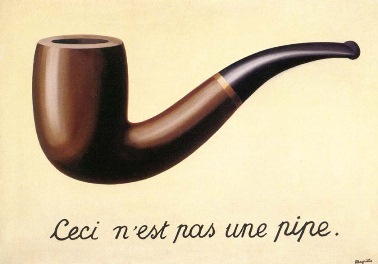
Which I feel was more than adequately boiled down by Rene Magritte in his painting, The Treachery of Images (La trahison des images, 1928–29), a painting of a pipe which he captions, "Ceci n'est pas une pipe": “This is not a pipe.” And it isn’t. It’s a painting of a pipe. “The famous pipe,” Magritte lamented. “How people reproached me for it! And yet, could you stuff my pipe? No, it's just a representation, is it not? So if I had written on my picture "This is a pipe," I'd have been lying!” (Torczyner, Harry. Magritte: Ideas and Images. p. 71.)
Taking this all further, Ebert noted about the cinematic culture around him, “We may be leaving an age of irony and entering an age of credulity. In a time of shortened attention spans and instant gratification, trained by web surfing and movies with an average shot length of seconds, we absorb rather than contemplate. We want to gobble all the food on the plate, instead of considering each bite. We accept rather than select.”
Modern movies, from this point of view, are neither self-contained nor created in a vaccuum. Every movie is made of particles from other movies. “Homage” has moved beyond the in-joke, background detail or set-piece and into literal and thematic presentation. So much of this is personified by Quentin Tarantino and his contemporaries. They’re not making movies, they’re making their versions of movies that had come before. “I told Robert [Rodriguez], ‘You made your Fistful of Dollars with El Mariachi, now’s the time to make your epic, your Once Upon a Time in the West”, sez the world’s most successful fanboy on the audio commentary for Once Upon a Time in Mexico. It’s like the self-referential humor of The Family Guy: “That’s funny because I get it.” The Inglorious Basterds was neither a remake of The Inglorious Bastards nor simply a World War II adventure, but it was Tarantino’s WWII movie. Coming up is Tarantino’s spaghetti western, Django Unchained
For better or worse, we’re slowly coming out of the age of irony and/or credulity because the most recent crop of movie-goers, including but not limited to the Twi-hards, are simply unaware of what came before, so every movie cliché is new to them. I remember a Twilight fan swooning over Edward because, “When he says cheesy stuff, it’s sincere because he doesn’t know it’s cheesy!” And thus we get Total Recall for this generation, Red Dawn for this generation. And this generation doesn’t know that they’re cheesy retreads, thus, they’re sincere. 
All of this is a backhanded way of introducing Ward Roberts new film, Dust Up, because it lands somewhere between ironic and post-ironic. Produced through his Drexel Box production house, Dust Up at first glance is a loving send-up of ‘70s exploitation, the “grindhouse” genre that is all the rage. Ironic because it takes the market-driven selling points of gratuitous sex, violence and mayhem and embraces them. Post-Ironic because it takes the most ludicrous of these elements to their logical conclusion. And post-credulous because it does it with sincerity, honesty and a passion for all of the sources that came before it. And in the end, Dust Up is not “Ward Roberts’ exploitation movie”; Dust Up is Ward Roberts’ Dust Up. It takes all the other-movie particles and molds them into something from his point of view and his sensibilities, and those of his collaborators, and makes something that’s both familiar and outrageous at the same time, but never seems derivative. It’s a balancing act to be sure, and on either side of the tightrope lies disaster. Fortunately, Roberts and company manage the middle walk very well. 
Dust Up is about the accidental—if not destined—collision of five people. New mom Ella and her junkie husband Herman, and two opposing forces: the stoic and enigmatic peaceful warrior Jack (Aaron Gaffney) and his Indian sidekick Mo (Devin Barry) on one end; the twisted and gleefully evil narcissistic personality Buzz on the other. Jack wears an eyepatch, a constant reminder of a tortured past as a violent soldier; Mo wears a Jay Silverheels outfit and yellow-striped tube socks, to both honor and mock his Native American forebears who have gotten rich and fat off of casino living. Buzz (Jeremiah Birkett) ingests chemicals, tortures people and declares everything to be his: “This is MY house. The House of Buzz. In the Land of Buzz. In the Time of Buzz.” 
Ella (Amber Benson) is a young mother living in a house with severe plumbing problems. Her husband Herman (fellow filmmaker Travis Betz), a roadie for Hoobastank (of all things), went a little loopy after the birth of their daughter, Lucy, and is now holed up at Buzz’s in a drug-induced, debt-heavy sabattacal. In need of clean water, Ella picks Jack’s name out of the phone book—the way of this peaceful warrior is that of the handyman. This is before Ella learns of her deadbeat spouse’s debt to psychopath, Buzz. Actually, Buzz is much more than a psychopath, more than a sociopath. He’s a charismatic, amoral, self-affirming bar owner-cum-cult leader who promises those he doesn’t like—or happens to notice—with death via dismantling at the hands of his chief thug, Mr. Lizard. What’s more amoral than a sociopath? An anthropath, perhaps? Whatever, you don’t want to owe money to Buzz. 
You know what annoys Buzz more than being owed money? Owing money to someone else. In this case, the corrupt, racist Sherriff Haggler (The Hills Have Eyes remake’s Ezra Buzzington), who wants his payoff and demands it in a most demeaning fashion. The laws of physics dictate that shit rolls downhill, to Buzz calls in poor Herman’s marker, gives him 24 hours to get the money and then has Mr. Lizard eject him from the bar in a most unfriendly fashion. 
Over the course of a few scenes, Jack becomes involved in Herman’s plight because it has become Ella’s plight. Jack is cut from the same cloth as most wayward heroes on the path of redemption—particularly Shane, according to an interview with Roberts at the Daily Grindhouse—so he isn’t likely to leave a damsel in distress. Before you jump to conclusions, he’s doing this out of pure spirit. Yes, Herman is a junkie, a bad husband, irresponsible, lazy, most likely unwashed and very much an ungrateful jerk, but these facts aren’t lost on anybody. The deeper he drags Jack (and Mo) into his pit of karmic despair, the more everyone—even Buzz!—questions why they’re bothering to help him out at all. The lesson to be taken away is if you’re going to be a selfish schlep of a person, you’d better have a pretty and capable wife and an adorable baby at home. Otherwise even Mother Theresa would be inclined to throw you to the wolves. 
As can be expected, things spiral out of control, epically and apocalyptically. Jack attempts to make good on Herman’s debt by lending him half of the money he owes Buzz in a show of good faith, but Buzz isn’t one to focus on problem-solving. In a matter of minutes, the casual morning meeting results in Buzz accidentally blowing up his bar—it’s a Rube Goldberg-esque chain of cause and effect, but the end result is that Buzz accidentally shoots one of his meth chemists mid-cook and, as we all know, meth is a most volatile and tempermental chemical potion. Emotionally, it’s the fourteen-year-old-girl of drugs.
The rest of the film could be titled “Buzz’s Bad Day”, as he punishes everyone in his path for his own misfortune. He and reason aren’t even in the same time zone, and if you’re wondering if depravity has a baseline, as far as Buzz goes, the answer is ‘no’. He does know how to whip up a freak frenzy. Unfortunately, he doesn’t choose his followers wisely. Drug-addled desert-scum aren’t known for their stamina, no matter how many barbecued human bodies they’re fed. This is best demonstrated when Buzz declares, “It’s orgy time!” and receives the same dismayed reaction as if he’d announced a pop quiz. 
Dust Up was obviously crafted to be a fun time for all, and it’s one of the rare movies, indie or otherwise, that is as much fun to watch as apparently it was to make. Behind it all are smart filmmakers who know which conventions to turn on their heads and which ones to embrace. As wacky as Dust Up is it never once tries to act like it’s better than either the genre or its audience. Unlike recent “grindhouse” movies like Hobo with a Shotgun, Dust Up wasn’t designed as a party tray of excess and nihilism. It asks you to care about its characters and then gives you characters to care about. Every one of the actors is pitch-perfect in their performances so it’s hard to single any one out. Gaffney’s a terrific hero archetype, violently opposed to violence lik Billy Jack, but with the smooth vocal tones of Joel McCrea. Barry brings just enough dry wit to Mo to comment on the insanity of things—even his own actions—without becoming hipster about it all. As Herman, Travis Betz—whose amazing allegorical demon cabaret, Lo (starring Birkett as the title character), introduced me to the majority of the versatile cast—gives the jerk of a catalyst an affability that earns a little bit of redemption at the end. Birkett doesn’t so much steal every scene he’s in as he attempts to corner the market on it. Buzz could all too easily be a cartoon villain, the word “Evil” given bushy eyebrows and pop eyeballs, but Birkett hints at a humanity buried deep beneath the viciousness and drug-induced paranoia. Both he and Jack project a loneliness and sense of loss, making them each other’s dark mirror. Perhaps the hardest job was placed on Benson’s shoulders. The filmmaker/author has the dubious honor of portraying the lone sane person in this sea of multi-colored insanity. Like Bob Newhart in all incarnations, she’s the only rational one in the room at any given time, and she does it with a sense of humor that anchors all the madness together. 
Roberts, Betz and Benson not only love film but understand it as well, as they’ve proven through this movie and previous offerings like Betz’s Joshua and Benson’s Drones (which she co-wrote and directed with Adam Busch). They’re not into the popular mash-ups of movie iconography and theme so much as they are into creating new forms from previously-used clay. As far as Dust Up goes, Roberts has taken the history of movies he loves and built upon it, rather than attempt to reflect it in some mirror he fractured himself. The result is both familiar to those who know the territory and unique at the same time. A ‘70s sex ‘n death-fest with an altruistic attitude taken from Howard Hawks westerns. A salute to what came before even as it moves forward. 
As the saying goes, “This is Dust Up. There are others like it, but this one is…” Roberts’, Drexel Box’s, and now ours. 

Tuesday, November 27, 2012

KILLER JOE (2012)

 
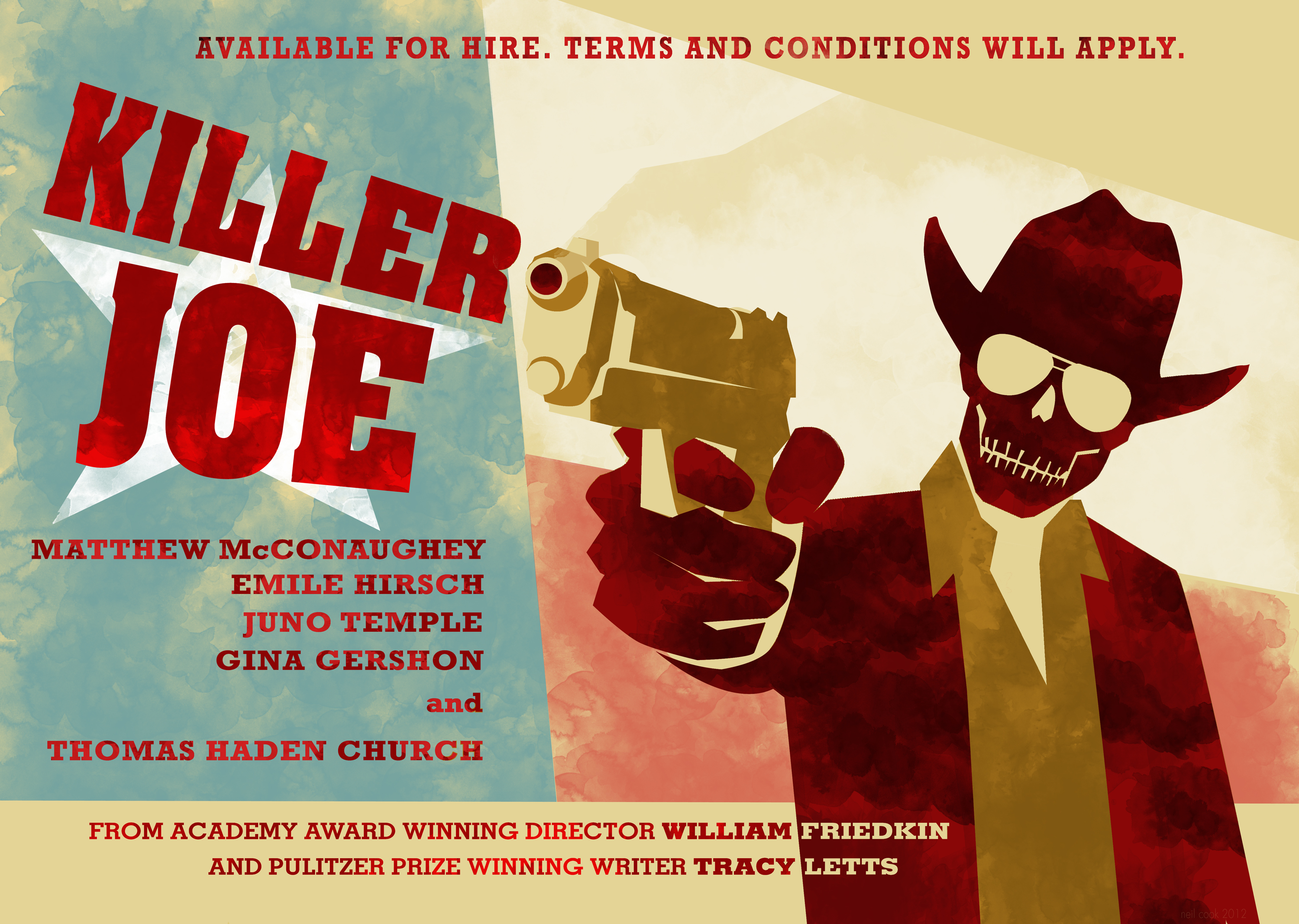
One of the most difficult things to learn as a critic of any kind is objectivity. Most critics fall victim to their own preconceived notions at some point in their careers. In many cases, it’s because the movie they watched isn’t the movie they expected to see. The most blatant example I’ve ever seen was from a reviewer who gave the low-budget indie adventure Project:Valkyrie a lousy rating because he, for whatever reason, expected giant fighting robots in the movie, instead of the lone man-sized one that was actually in the film. (Above image found at http://www.behance.net/gallery/Killer-Joe-typography-and-poster-concept/4037639)
In a perfect world, all critics would approach every piece of art with an open mind, judging it only against itself in terms of success or failure. But since critics are human beings, and our knowledge is based on past experiences, that approach will never happen, so we have to rely on intellectual filters to avoid bias. If, as a critic, one can attain self-awareness and avoid self-righteousness, then your reviews will reflect fact and opinion honestly.
Obviously, this isn’t just the failing of critics. Everyone dislikes at least one movie for not being what they expected. I’m just as guilty as anyone. I did not review Cronenberg’s History of Violence when it was released, not because it departed so radically from the graphic novel it adapted, but because it went in a third direction I didn’t anticipate. I wasn’t expecting David Cronenberg, of all artists, to take the storyline into familiar action movie territory. Because the movie didn’t live up to my ill-conceived expectations, I felt resentful towards it for some time. (Maybe I should be proud of myself for not expressing those feelings in print, instead of the more-reasonable reaction of being disgusted with myself for setting my own trap.)
Fortunately, I knew going into it that I was going to be biased, both pro and con, towards Killer Joe. First, I was already pre-disposed to liking it because of director William Friedkin’s first adaptation of a grim Tracy Letts’ play, Bug. Bug was my intro to Letts’ surreal Southern Gothic gallows humor and Killer Joe is the only of his plays I’ve seen performed live. It’s a violent, crass and grotesquely funny slice-of-horror involving a white trash family and a hired killer. People are violently assaulted and bloodily murdered on stage throughout the course of the film (effects in this case courtesy of A Far Cry From Homes Benzy). There’s also a better-than-fair amount of nudity in the play, made much more graphic by my position in the front row, about a foot or so from the stage. Plus, these were local actors who I knew for the most part and, considering the play opens with the lead actress bare from the waist-down, again, a little over a foot from my face, it’s hard not to get involved. The second act opens with the titular character, a corrupt Dallas police detective, completely nude, feet from my face, and during which time seemed to slow down to eternity (again, small theater).
in background, from left) John Gresh, Lissa Brennan, John Steffanauer 
and Hayley Nielsen, and (foreground) Patrick Jordan in 
barebones productions' Killer Joe. Photo by Ilya Goldin.]
  I was blown away by Letts’ script, shocked by the violence (I dodged a flying chicken leg during the climax), and astounded by several of the performances. In particular, I was struck by Haley Nielsen, who played the family’s possibly brain damaged pseudo-Lolita, Dottie. Dottie sleepwalks and sleeptalks, says odd things at inopportune times and appears almost psychic at others. She’s damaged and fragile and is the audience’s anchor to the story—even if you couldn’t care about the other characters, doomed and damned by their own bad decisions, you want to see that Dottie is safe in the end. Nielsen, a local actress I wasn’t familiar and thus wasn’t saddled with any of my personal baggage, performed Dottie with a far-away, almost ethereal quality, fully aware of what was happening, yet at the same time far-removed and emotionally stunted. Dottie is the key character in Killer Joe, all of the action revolves around her to some degree, and I think any performance of the play would hinge on the actress playing her. 
So, as a fan of the play, I was simulataneously excited and trepidatious about a film adaptation. Given Friedkin as a director, I figured the story was in good hands, particularly with Letts adapting his own script for screen. Because Billy F. never struck me as a guy who particularly gave a shit about mainstream success, I figured all the violence and sex would remain intact. My biggest fear, though, was not who would play Joe but Dottie. Friedkin could stick Adam Sandler in the title role and still pull off a good movie. But Dottie… no Hollywood actress even came to mind. 
Just like the play, Killer Joe begins with Chris (Emile Hirsch) banging on his father’s trailer door, begging to be let in. He is answered by his stepmother, Sharla (Gina Gershon)—she’s naked from the waist-down and her crotch is in his direct line-of-sight. This is how both Letts and Friedkin establish the sophistication of the crowd. “You answer the door like that?” Chris demands. 
To which Sharla replies, “Shut up—I didn’t know it was you!”
“Class” is not an issue with these people. So it comes as no surprise that Chris is in debt to drug dealers and wants to hire someone to kill his birth mother for $50K worth of insurance money. It’s less of a surprise when his wet-brain father, Ansel (Thomas Hayden Church), less than a generation older than his son, puts up little argument against the plan. Somebody told Chris “about a guy” who does murder-for-hire, Dallas cop Joe Campbell (Matthew McConaughey), aka “Killer Joe”, and Chris figures that the guy might be charitable enough to do the job on spec and take a cut of the insurance money after. But Joe isn’t the kind of guy to give away murder services and demands twenty-five grand up front, non-negotiable. The story might have ended there, with the Smith family returning to their no-class hovel, if it weren’t for Dottie (Juno Temple). As a baby, Dottie’s mother tried to suffocate her with a pillow because “she was young and didn’t want to give up her life.” It didn’t work, obviously—Dottie just “wasn’t” for a short while—and returned to the land of the living as a constant disappointment. When Joe asks Dottie how she knows this happened, being an infant and all, Dottie replies, “I remember it.”
Dottie is part of the family without serving any specific function. Ansel treats her like a little girl; to Chris, she’s the only shred of anything good; to Sharla, she’s just around, to make dinner or run errands. Emotionally, Dottie is twelve and no one does anything to help her mature. The only giveaway that she’s older is her body and her unconsciously-hyper sexuality, which disturbs Chris’ dreams and enchants Joe. Joe agrees to do the job as long as Dottie is his “retainer”.
Joe and Dottie’s “first date” starts off uncomfortable enough. She rebels at wearing a cocktail dress and is sobbing when Joe arrives. He speaks kindly to her, but matter-of-factly, without condescension, without walking on egg shells around her. Midway through their meal, he puts an end to her incessant absent-minded and skittish babbling by having her stand up, remove her clothes and put on the dress for him. As in the play, this is an electrically creepy moment but for completely different reasons. On stage, Nielsen stripped in front of Joe and, thus, in front of the entire audience, rendering herself completely vulnerable and not just to him, but to the audience. It’s meant to draw forth instinctual protectiveness from everyone watching, accentuating that Joe is a predator. But in the film, Friedkin stages the action in a single shot where Joe stands with his back to Dottie as she changes. The camera doesn’t focus on her nudity but it doesn’t shy from it either. What we focus on, then, is a similar transition in Joe’s character, but one with far more menace. Never once does he face her, and barely looks at her even when he moves her in front of him, and instead keeps his eyes on some faraway spot on the ceiling. “How old are you right now?” he asks. 
“Twelve.”
“So am I.”
By now if you’re expecting any kind of happy ending, I wish I could live a day inside your mind. 
The underlying violence begins to ripple forth at this point, as Joe installs himself in the family’s trailer and their life. Chris’s sense of morality keeps butting up with his instinct for survival and he continually flip-flops over the plan—kill her, Joe; don’t kill her, Joe—and then he focusses purely on rescuing Dottie, who at this point may not even need to be rescued. But since Chris hasn’t made a single winning move since the film started, the outcome, to quote the Magic 8 Ball, “is doubtful”. 
Friedkin plays Letts for all its worth, squeezing every drop of amorality and depravity onto the screen. Even if you know all the beats of the story, the violent beats are still shocks of cold water. And everyone in the film holds their own. Matthew McConaughy is a stand-out as the cold-blooded Joe, who is sweapt out to sea by the dotty Dottie. There is a moment, after Sharla has been beaten and humiliated, where the camera stays in tight close-up on Gina Gershon’s face and you know she’s never been better. Emile Hirsch as Chris and Thomas Hayden Church as Ansel keep our sympathies in the air like a heated game of volleyball. None of the Smiths are remotely bright; their desperation drives their mundane existences and there’s no real loyalty lost between them. It’s almost too easy for a reptile like Joe to slide in and dominate them all, especially when they think they can use chest-beating to gain the upper hand. 
So it all comes down to Juno Temple as Dottie. Not an illogical choice, given her impressive performance in Atonement. (Hey, it got her into four collective minutes of The Dark Knight Rises.) In Killer Joe, she is uninhibited and unashamed, her vulnerability is communicated by her big doe eyes and post-pubescent movements. And it’s here that my objective dissonance took hold. It’s entirely unfair to compare Temple’s performance to an actress in a regional production of the play, but Hayley Nielsen was my introduction to the story and her performance defined the character to me. As Dottie, Nielsen was ephemeral and on another plane of existence than the rest of the characters. Most of her lines were delivered in a breathless and excited monotone, every line a declaration and, thus, a non-sequiter. For me—and only for me, obviously—Temple was too grounded in her portrayal of Dottie. Within tight close-ups her Dottie was never farther from me than Nielsen, spacially-speaking, and her fragile, damaged persona is in perfect service of the story and script. But she had a physical presence that Nielsen intentionally abandoned, and it drags the rest of the story, and all of its horror and grit and despair, down into the gutter where it began. Temple Dottie struck me as too real. The rest of the family you could meet at any Wal-Mart in the country. A physical realization of Dottie, even though she is a “pure” character, brings these low-lifes into too-sharp of a relief. 
But a real Dottie allows for a more believable Killer Joe. I have no real proof in my suspicion, but I think it would be an easy temptation for actors to play Joe as a bad-ass, smooth and over-the-top thug who is only in control because he’s slightly smarter than those around him. Everyone in the story is in danger of characature, just a few millimeters off in either direction will result in something balloony and lumpy from a Ralph Bakshi movie. But McConnaughy plays Joe as a well-oiled psychopathic watch, a mass of coiled springs contained by the exterior. His interaction with Dottie brings out a different man, a man used to control but unused to an unpredictable factor like Dottie. Though he does manage to possess her, there’s something of her at work on him beyond her childish sexuality. She mentions “pure love” several times throughout the film, and what Joe feels for her is obviously far from pure, but maybe to his mind it is. His interest in her may be a result of something human unlocked inside of him. As with Dottie’s nudity, Joe’s interaction with her allows for something vulnerable to shine out. It isn’t redemption, but it isn’t the revulsion you’re meant to feel during a live performance. 
It could be quibbling, but this leads to one point of genuine disappointment in the film. In the play, Joe’s dominance and subjugation of the family is presented at the beginning of the second act. Having been brutally beaten by the drug dealers, Chris collapses through the trailer’s front door. Instead of Sharla, he encounters a completely naked and gun-weilding Joe. Thinking Chris might be a burglar, Joe has lept out Dottie’s bed and onto Chris as the complete alpha male. On stage, it’s shocking, naturally, and awkwardly funny and uncomfortable, but it establishes Joe’s new position in the dynamic. Like Beowulf, he’ll face his greatest challenges with only a weapon and the skin he was born in. 
In the film, Friedkin declines to show McConaughey in his full-frontal glory. It’s obvious that he’s completely nude, but the reveal isn’t as strong. We stay on a neutral point of view as Chris crashes through the door and Joe is already waiting for him on the other side. Visually, it removes a great deal of dynamism from both the scene and Joe’s character. In the film, instead of a Grecian athlete or an unbridled predator, he’s simply a naked guy with a gun. An argument can be made for many things—that it cheapens Temple’s and Gershon’s nudity, that it was staged thusly to avoid further problems with censors (even though Friedkin allowed the film to go to theaters unrated, which waters down this latter argument). All it does is diminishes the ferocity of the scene. I’ve thought it over and come to the conclusion that this is a thematic mistake. My issues with Juno Temple’s performance are my own hang-up. 
With all the other fearless choices made with the material it’s disappointing that Friedkin and/or McConaughey--to quote an actor I’ve worked with who is accustomed to nude scenes--“pussied out on the dick shot”. 
Ultimately, a play isn’t a movie and a movie isn’t a play and critics should remember that before they waste time writing a review. Report on the art you saw, not the art you expected. And definitely don’t watch Killer Joe without a designated moral compass.
[Special blame goes to Eric Thornett (writer/director of A Sweet and Vicious Beauty) for originally dragging us to the play in 2009.

Thursday, August 11, 2011

THE FINAL TERROR (1983)


Say, did you ever see that movie where a bunch of attractive young people go on a camping trip and are picked off one-by-one by a shadowy, inbred maniac? No, not that one.

Not that one either.

The movie I’m referring to is 1983’s The Final Terror. Which was originally shot in 1981 and then finally released under the various titles of Three Blind Mice, The Creeper, The Campsite Murders and The Forest Primeval. It wasn’t shelved because it was bad, per ce, but because of the ‘80s slasher movie glut and the studios thought it might be best if they sat on it until some of its young stars got famous. Yes, okay, Mark Metcalf was already a beloved figure thanks to 1978’s Animal House, but it would be a few more years until his turn in that Twisted Sister video. But Sam Arkoff and Joe Roth were prescient; they just knew that within a year or two, Darryl Hannah, Rachel Ward, Joe Pantoliano, hell, even Adrian Zmed—would all be super respected, bankable and literally household names (except for Pantoliano, because to this day no one can pronounce his name correctly and refer to him as “Joey Pants”. True.).

Until then, their literally and figuratively dark morality tale of the forestry industry would just have to wait. And wait it did.

But even then, from the time of its conception and release, The Final Terror’s story about sex and slaughter in the forest was nothing really new. It certainly wasn’t the “final” anything, given the success-range of countless others before and after. It doesn’t even corner the market on the upcoming-stars cast list (that honor may have to go to The Burning, featuring performances by Holly Hunter, Jason Alexander, Fisher Stevens, etc.). In point of fact, exchange “young forest rangers in training” with “camp counselors”, “spelunkers”, “smoke jumpers” or even “horny botanists”, and you have roughly the same movie as every other ‘80s gorefest.

But there’s something about The Final Terror that makes it stand out from the crowd. Maybe it’s the direction by future Under Seige and The Fugitive helmer Andrew Davis. Perhaps it’s the naturalistic lighting, making the beautiful California forest deceptively safe during the day and claustrophobic and foreboding during the very dark night scenes. Certainly, the cast helps, though Pantoliano has the best lines as the creepy driver Eggar, while Ward and Hannah barely have a dozen lines between them. Zmed is given far too much screentime, but that can be said about any movie he’s in, really.

It’s not that The Final Terror feels slicker or smarter than it’s ‘80s hack-em-up brethren. Heck, it isn’t even all that gory. So what is it about the sum of its meager parts makes it so enjoyable?

The MacGuffin of getting the characters out into nowhere is literally that. A routine work detail brings rangers-in-training to the forest, after a brief stop to pick up their girlfriends en route. After some character-defining bickering and the establishment that driver/mechanic Eggar is a by-the-numbers-weaselly-asshole, they finally make camp. The game plan is to reblaze a trail and then raft downriver where Eggar will retrieve them via his bus. Around the campfire, they talk about the local legend of a crazy woodswoman who raised a wilderness child and sent him off to live among people while she stayed amongst nature and killed hikers. Something about this pisses Eggar off so he climbs into the bus and into the night.

The story somehow manifests the legend to life, because before too long, an unseen force begins picking them off. We the audience see the killer in brief glimpses—a shape covered in fur and foliage, able to blend into the background, appearing as a mound of moss on a river stone, a clump of leaves on the forest bed. It springs to murder with sudden viciousness as its victims usually sit down right by it.

After two of their friends are slaughtered and one goes missing (for a time, he’s actually harvesting wild marijuana), the group becomes convinced that Eggar is behind it all, his brain finally snapped. From then on, the remaining most malcontent of the bunch, Zorich, puts himself in charge. A survivalist, he leads them to their final stand in a natural gully, where they woodland combat perfected by picts and ewoks—swinging logs, spear-pits, survival knives, etc.

And then suddenly, their hopes and dreams are destroyed when they discover it’s not really Eggar behind it, but someone very else. Maybe even crazier than either Eggar or Zorich or Zmed’s agent.

Davis uses the scenery to his advantage and minimizes the clichés when possible. Where many of its fellows go for the pile of mutilated bodies, The Final Terror keeps the body-count to the minimum. After the first couple of victims, the group opts for not splitting up to cover more ground. The unseen killer is used to great effect—it is not an unkillable invisible force, but could literally be anywhere as it stalks the rangers. The device makes every footstep beside every rock a moment of tension. Davis’ direction and the script by Jon George, Neill D. Hicks and Ronald Shusett refuses to play the clichés that we’re used to. Even in 1983, audiences were savvy to the fake scare-then-real scare formula, the creepy point-of-view, the sudden jump, all leading up to a single survivor girl. But The Final Terror frequently tosses that all on its ear. For some viewers, IMDb critics, for instance, this all adds up to “boring”, a movie where “nothing really happens”, “with almost no gore”. For the rest of us, this recipe results in a welcome and unexpected nail-biter.

Granted, The Final Terror is no masterpiece and it’s nearly forgotten today by all but the most encyclopedic of horror fans. The official DVD came and went in 2005 and fetches upwards of $40 through the official channels. The original VHS often runs just as high. (Althought you can watch it in parts or in whole online at places like YouTube and Dailymotion, if that's good enough for you.) I suppose the name Adrien Zmed just doesn’t carry the weight it used to. But it’s a taut, worthy thriller that has earned its place in horror history and deserves a reissue, if only for the day-for-night siege on the bus that had me, at least, on the edge of my seat. Like the rest of the film, even though I had seen that sequence in countless other movies, because of the way it zigged and zagged, I really hadn’t seen it before. That’s the best part of The Final Terror: you have no idea where the old and overgrown trail is going to lead. 

Wednesday, May 26, 2010

THE LAST HARD MEN (1976)


 Paul Bartel’s Lust in the Dust aside, there aren’t too many “sleazy” westerns out there. The most cynical parodies retain a certain reverence for the genre and even attempts at revisionist or “de-mystified” westerns, ala McCabe and Mrs. Miller or Unforgiven avoid outright salaciousness. True, you’ll get a Hannie Calder now and then, but even that excuse for sagebrush T&A still cloaked itself in western thematic iconography (insert obvious simile regarding Raquel Welch nude-under-the-serape). For the first sixty-plus years of film history, the Western was the American genre. It was well to which all the studios went for both their epics and their programmers. Just as new directors cut their teeth on horror today, fledgling filmmakers had their mettle tested amidst the “horseshit and gunsmoke”. The western was the encompassing symbol of all things American: the hearty settlers carving life out of the wilderness, the taciturn men facing their problems head-on, the lonely gunfighter fruitlessly seeking redemption, and, of course, westward expansion—manifest destiny—the god-given right to the American government to seize the land before them.

Things began to change in the mid-60s for the Western, just as the entire film landscape was changing, for the usual reasons cited: the Viet-Nam War, the Peace Movement, the collapse of the studio system, the rise of filmmakers raised on film, influenced by European cinema (including the so-called “Spaghetti Westerns” coming out of Italy) that had been, in turn, revolutionized from within by American movies—art is often a snake eating its tail. Two films in particular marked the end of “classic” viewpoints: Bonnie and Clyde in 1967 and The Wild Bunch in 1969. These films did more to demystify the programmer genres of the crime story and the western. Penn’s Bonnie and Clyde drove home the idea that crime was a product of nature and nurture and that criminals often came to a more horrific end than a mere clutch of the chest and a face-plant to the pavement. Peckinpah’s The Wild Bunch took the graphic depiction of violence even further, splashing blood atop the collapse of the American West. Bad men gunned each other down in the dust all too aware that their world had changed without their permission. The automobile had replaced the horse; the telegraph replaced the romantic (and historically short-lived) image of the Pony Express. With these revised themes came revised filmmaking presentations—slow-motion, fast-motion, special effects and characters whose allegiances weren’t boiled down to the color of their hats. Art reflects the world around it. With the world in turmoil, so, too, was Hollywood.

After the end of Viet-Nam, after Nixon had resigned in disgrace, Americans grit their teeth and either resisted the world as it was, or mourned what they thought they’d lost. Revisionism gave way to cynicism. And cynicism was reflected back at audiences from the movie screens.

Which brings us, finally, to The Last Hard Men. Based on Gun Down, a novel by the original sad tough guy Brian Garfield (whose everyman vigilante novel Death Wish had was adapted to the screen and became a box office success in 1974), The Last Hard Men took the revisionism of Peckinpah and Penn and infused it with the frustration of the ‘60s and heartbreak of the ‘70s, resulting in a movie whose only passion can be found in hatred.

Set in 1908, hardened criminal Zack Provo (James Coburn) kills two guards and escapes a Yuma chain gang along with a half-dozen other convicts. Enticing them with the promise of $30,000 worth of buried gold coins, Provo leads his new gang down a path towards his real destination: the destruction of Sam Burgade (Charlton Heston), the lawman who killed his wife and put him in prison in the first place. Burgade, now both tired and retired, is at odds with the changing landscape. His successor, Pima County Sheriff Noel Nye (Michael Parks), organizes car-driving posses and maintains the law over the phone, more concerned about trains running on time than such antiquated ideas of “outlaws”. Working with Nye, Burgade sets up a juicy bankroll arrival to trap Provo and his gang, but things backfire. Uninterested in a new score, Provo anticipates an ambush and, instead, goes to Burgade’s house and kidnaps his daughter, Susan (Barbara Hershey). Taking her to a Navajo reservation outside of Nye’s jurisdiction, Provo all but guarantees Burgade pursuing him on his own, ensuring the most personal of showdowns. Indeed, this is what happens, with Burgade’s only companion the “civilized” Hal Brickman (Christopher Mitchum), Susan’s fiancée.

Provo’s singular hatred of Burgade is the film’s driving force, and a good number of people caught between the men are hurt or killed, as is to be expected from this type of story. Near the end, to lure Burgade out of hiding, Provo “gives” Susan to his men. They give her a head start down the mountain, but eventually the two worst men of Provo’s gang catch her and make good on Provo’s earlier promise by gang raping her. As shocking as this scene is, what is astounding is that it is Brickman who holds Burgade back, very literally after an impatient Provo shouts—“Burgade! They’re fucking your daughter!” The tenderfoot dandy Brickman is forced to put the butt of his rifle to Burgade’s temple to keep the old man from rushing into the open and certain death.

Until this point in the movie, The Last Hard Men seems to almost revel in its unpleasantness, hence the interpretation of sleaze. The primary theme of modernization devouring all but the most non-receptive of the pioneers gets a bit lost during its time spent with the single-minded and thoroughly awful Provo who is only the worst of the bunch because he’s the leader. Little is revealed about the others in his gang, save that they’re all repellant and unrepentant murderers who turn on each other as quickly as they would on anyone else. Only the young Mike Shelby (CHiPS’  Officer Jon himself, Larry Wilcox), referred to as “the kid” by the other characters, seems out of place amidst the group, implying a less-wholesome prison relationship with Provo. But he too is serving life; unlikely the sentence was for nothing. That he shows tenderness towards Susan, where the others give only lustful brutality, doesn’t let him off the moral hook.

After the rape scene, however, the movie howls with righteous anger and an overdose of testosterone. Some critics have pointed out that, after this point, it’s no longer about Susan, but in truth it never was about her. The Last Hard Men is about two displaced alpha males out to kill each other as brutally as possible. Provo “wants to make it last”; Burgade wants to bring down someone who “beat me once”. Ego begets savagery.

The Last Hard Men is actually at odds with itself from beginning to end. Directed by Andrew V. McLaglen, a protégé of John Ford’s who worked second-unit on The Quiet Man and went on to helm straightforward westerns like Shenandoah and McLintock!, The Last Hard Men certainly looks like a traditional western (thanks to the gorgeous cinematography courtesy Duke Callahan (Jeremiah Johnson). Solid western character actors lead the cast: the usually bombastic Charlton Heston gives a surprisingly underplayed performance to help us believe that he’s old and tired; the nigh-impossible to dislike James Coburn does his best to be repugnant and embraces the only aspect of new technology Provo likes, namely an automatic Colt (which he uses to literally gun down a telephone early on in the film). It sounds like a traditional western, thanks to Jerry Goldsmith’s self-cannibalized score—or at least it does for the majority of the film. Then comes that horrific two-thirds mark. Suddenly the movie picks up a Peckinpah edge with the pursuit and rape occurring in agonizing slow motion and atonal assaults of music. Burgade’s rage becomes physical as he and Brickman set the mountainside on fire to smoke out Provo’s gang. At this point, the movie is meant to turn primal, but McLaglan’s heart doesn’t seem in it. The last act of the film is completely different in tone, as if the narrative was poisoned by the rape, that it seems to want to wrap as quickly as possible. Thus the final showdown, while bloody, lacks any kind of catharsis. The viewer is left feeling exhausted, drained and gritty.

Some of the blame can be placed on Guerdon Trueblood’s handling of Garfield’s tough-guy novel. Trueblood had directed the nihilistic The Candy Snatchers the previous year, so maybe some of that unpleasantness still tainted his blood. But the material, overall, seems wrong in McLaglan’s hands. The director, raised on a love for the material and the trappings of the American Western, fights his own movie from open to close, mirroring Burgade’s bemusement with the modern world, but likely sympathizing more with Provo’s disdain of the changing times. McLaglan himself is one of the “Last Hard Men” in this equation. It would seem that he would be much more comfortable with something more traditional, where the heroes wear white hats, the villains wear black, and shades of gray are relegated to the costumes of the extras. The bitter ‘70s, with its love of anti-heroes, held no more fascination for the director, it would seem, than the turn of the new century did for Burgade.

This suspicion is given weight by the fact that following The Last Hard Men, McLaglan returned to television and worked a good deal with The Wonderful World of Disney for the remainder of the ‘70s, returning to the “tough guy” genre only once more with The Wild Geese, which is morally and politically more straight-forward than The Last Hard Men. Upon its previews, the movie was met with derision and critical disgust, leading 20th Century Fox to cut almost ten minutes from the running time prior to release and was loathe to release it to home video for years. It still has not received a domestic DVD release.

Modern audiences, when referring to the movie at all, lump it in with Spaghetti Westerns, citing similarities between its cold-hearted tone and that of Leone’s “Dollars” Trilogy. But where Leone was just playing in the Western sandbox without really understanding what a “western” really was—an argument for another time, but, in short, the Italians were viewing the genre with a detachment, rather than with a sense of history or, to be honest, a sense of homeland pride—McLaglan was a veteran of the Golden Era. The quintessential cowboy, John Wayne, long a symbol of steadfast Americanism (remaining one to this day), had no place in the ‘70s west (how else to explain Brannigan or McQ?). Wayne’s poignant comment on the Golden Era’s end was The Shootist, which let the West die with quiet dignity. McLaglan’s was The Last Hard Men—a death knell and a wail.